• Skip to primary navigation
  • Skip to main content
  • Skip to primary sidebar
  • Skip to secondary sidebar

John Du Cane

  • Books
  • Reviews
  • Blog
  • About
  • Contact

breathing

The Pain Body

January 19, 2018 By John Du Cane

“The pain-body wants to survive, just like every other entity in existence, and it can only survive if it gets you to unconsciously identify with it. It can then rise up, take you over, ‘become you,’ and live through you.”—Eckhart Tolle

Residual emotional pain can lurk like a virus in our system, waiting to trigger and burst forth when we become suddenly vulnerable. Like a virus, there is a cunning intelligence to this “pain body.” And, like a virus, it is ever alert for the opportunity to gorge itself at our expense. When the pain body does have a breakout, the damage from the feeding frenzy can be expensive.

Some of us have relatively mild and quiescent pain bodies. They live deep within us and are rarely triggered. Others of us seem to be more like “pain bodies waiting to explode.” The rage, the fear, the hatred, the resentment seethe and simmer just below our surface—ready to leap from our throats, talons bared, at the slightest provocation.

The Pain Body

In recovery, it is essential to build some skills against a sudden pain body attack. Or a pain body attack from another person. A major theme running through Spark Your Day is the need for us to be ever-vigilant in protecting ourselves against incipient vulnerabilities. A vulnerability not attended to in time, can lead all the way to a relapse, after all.

By its nature, the pain body can only grow when we feed it. If we are attacked by another person’s pain body eruption, by far the best strategy is to not give it juice. Just don’t respond. The pain body attack will dissolve through lack of reciprocity.

If the pain body attack is erupting from within us, then we have at best a few seconds to negate its impact—before we are overwhelmed and become its victim. Self-awareness is the ultimate self-defense against the pain body. Remaining fully aware—noting but not reacting to the proffered engagement—will burn away the pain body’s power. However, some of us may lack the meditative skills to pull that off successfully…

Here’s a movement/awareness/breathing exercise to help fortify our chances of vaporizing a pain body attack:

Stand relaxed with the feet shoulder-width apart. Place your attention in your stomach (where the attention goes, the energy goes). Take a long, slow, deep inhale that expands your stomach gently, like a balloon. As you perform this inhale, raise your right hand up and across your body until it is opposite your left shoulder.

During the movement, spiral the hand and arm as if screwing in a light bulb. When you reach the top position, your palm will be facing up toward the ceiling. Run your attention from your stomach, up your back, then through the arm and finally into the palm as you complete the movement.

Spiral your palm and arm down back to your right side, as you exhale. Reverse the flow of your attention, so you guide the energy back from the palm to the stomach. Repeat this movement ten times. Or more, if you want. Then switch to your left hand and repeat on the other side.

Don’t be surprised if your fingers and palms start to warm up and even tingle as you do this. That’s the breath and energy stimulating your blood flow. Which is a beautiful thing! Over time, performing this movement will leave you feeling a nice combination of relaxed and energized—the perfect defense against that pain body trying to disrupt your equanimity…

It feels so empowering to be able to relax out of my self-induced tension!
Filed Under: Spark Your Day Tagged With: breathing, energy, pain body, tension

To Rest, To Renew, To Refresh

January 17, 2018 By John Du Cane

“Taking time to rest, renew, and refresh yourself isn’t wasted time. Recharge. Choose what energizes you.”—Melody Beattie

When we are addicted to exercise, taking time off can seem like a guilt-inducing betrayal. We can get real antsy sitting on our butt, rather than pushing the envelope physically, day in day out. We drive ourselves to accomplish something—anything—and of course the quest for the endorphin rush is never far from our minds. This drive to exercise is laudable. The drive to tear our body down without giving it time to restore itself—not so much.

Remaining resilient in our recovery requires a delicate toggling between the vigorous and the gentle. Too much, too often can result, too easily, in too little, too late… We hit the wall, we get hurt—and if we are not careful, our exercise program grinds to an unseemly halt. Self-care in recovery is a two-way street: make physical gains by challenging our systems. Then reward ourselves with a restorative healing process that will help consolidate those gains. The older we get, the more time we need for that restorative consolidation.

We inflict benign damage on our muscles to prod them into adaptive strengthening. Excellent! It’s a sort of induced, temporary state of vulnerability intended to reduce our longer-term vulnerability. That’s show biz… As guardians of our own recovery, we just need to be hyper-alert to our tendency to overdo it—and put ourselves potentially at risk.

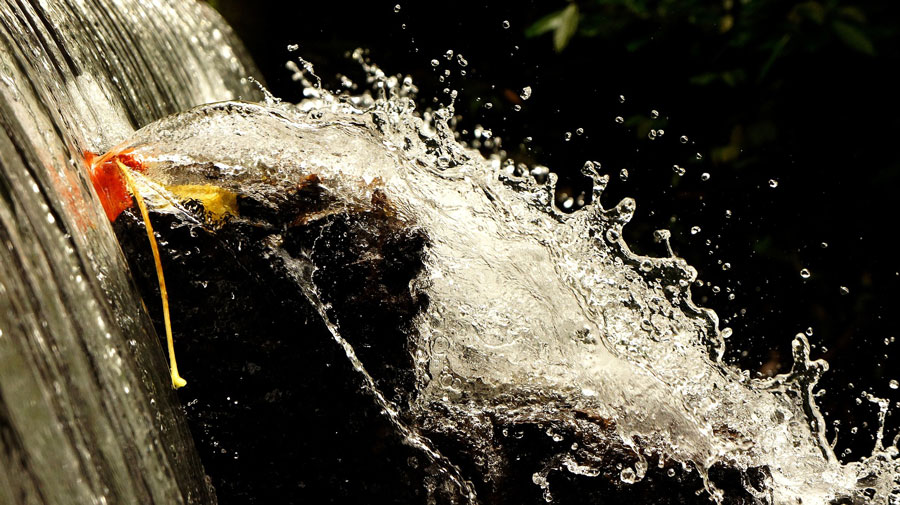
Refreshing Waterfall

So, the restorative movement today is mostly mental:

Stand in a relaxed posture with knees slightly bent and arms held slightly away from your sides. Take a long, slow inhale. As you inhale, use your attention to have the sense you are pulling energy through every pore of your skin, deep into your bones. Feel your entire body expanding, as if you were an inner tube being pumped up. Then exhale very slowly, sending the energy back out in all directions. Feel your body contract on the exhale. Repeat for at least ten iterations. Do as many more repetitions as you feel to.

This is a very powerful and wonderful practice. It’s a treasure. Practice it to know it and feel it… Your recovery will thank you for the care and attention!

I am taking the time to restore my energy, body and being by relaxing, resting and breathing.

Filed Under: Spark Your Day Tagged With: breathing, breathing exercise, movement, rest, restorative movement

Fret Not My Friend

January 7, 2018 By John Du Cane

“If you ask what is the single most important key to longevity, I would have to say it is avoiding worry, stress and tension. And if you didn’t ask me, I’d still have to say it.”—George F. Burns

Every emotion we possess is part of a complex signaling system which helps us adapt to and survive in our environment. When managed appropriately, even the most powerful emotions—like anger, fear and worry—protect us and make us stronger against threat.

When we were using, we often had the darnedest time managing our emotions—mismanage would be the better term! Instead of remaining the conductor of the orchestra of our feelings, we let ourselves get roughed-up by some out-of-control bully boys. We tend to label those bullies as “negative emotions.” More constructive, though, would be to view them as “emotions-gone-astray.”

Ruminating in moderation about past mistakes and craziness, can help us avoid similar scenarios in the future. But chronic rumination about past misdeeds can cripple us with a cascade of destructive stress-response chemicals.

Worrying in moderation can help us face potential future challenges with greater resilience. But chronic worry can create needless stress where none had to exist—again creating a destructive cycle of energy-sapping, if addictive, chemical surges.

stress and worry

In recovery, we have been given a number of tools to help safeguard us against our compulsive flirtation with those more volatile emotions. However, it can still often be exceptionally difficult for us not to get dragged down and beaten up by our worries and our regrets.

Here’s a powerful method that can short-circuit these bad boys in one fell swoop:

Lie down comfortably. Place your right finger-tips gently on your breastbone and place your left finger tips just below your navel. Inhale gently, while imagining that the breath is flooding into your heart area. Exhale gently as you send your attention into the stomach below your finger-tips. Where the attention goes, the energy goes. Repeat from five to ten times (or more if you like.)

Now cross both palms over your stomach. Using your attention in the same manner, inhale into your stomach. Then exhale into your stomach. Repeat from five to ten times (or more if you like.)

When you do this with good focus, you will effectively zap your brain’s support system for all that worrying and rumination. It’s like someone turned off the current—which is exactly what you did! You may be rather amazed at just how well this simple method can “take you out of your head” and into the calmer pastures of your heart and stomach.

I welcome getting out of my busy, busy head—so I can enjoy the pleasures of a less stressful day.

Filed Under: Spark Your Day Tagged With: breathing, breathing exercise, rumination, stress, worry

The Gentle Obsession

January 6, 2018 By John Du Cane

“For an artist, the absence of positive obsessions leads to long periods of blockage, repetitive work that bores the artist himself, and existential ailments of all sorts.”—Eric Maisel

Great stand-up comedians obsess about jokes. They are “jokes waiting to happen”. They are early warning systems for that first faint glint of humor—to be snagged, seized upon and worked up. Until eventually they arrive at the final, tingling pleasure of a joke well told.

The moment that hint of a joke pops into consciousness, they write it down, let it incubate, refine it, test it, practice it, then refine it some more. It’s a never-ending, obsessive love affair with humor creation.

And so it is with all great artists, musicians, writers, creators. Positive obsession is the driving force behind their art work for the ages.

In our using days, our major obsession was our drug of choice, right? Drugs were our life. We were a “drug-buzz waiting to happen”. We were consumed with the never-ending quest for the perfect chemical high. We obsessed over source, supply-chain, stash. We lived in constant fear of loss. Our happiness was measured by the shaking spoonful. We lived to drug… We were married to a relentless beast that had us by the throat…

In recovery, one of the best things we can do for ourselves is to redirect our previous obsession with mood-altering chemicals into a gentle obsession with mood-altering health practices. We can re-write the evolving saga of our bodies into a more poetic and pleasant journey.

If we can but taste again the beauty of our own body’s natural song, we can enjoy the gentler bliss of “health waiting to happen.”

For today, here’s a simple but very powerful breathing practice that can quickly make you feel wonderful:

Sit comfortably with good posture, or lie down and relax. Inhale deeply and quickly through the mouth taking in big gulps of oxygen. Exhale with vigor. Repeat 20 to 30 times. After the final exhale, hold the empty breath for as long as you can—without being too extreme about it. Allow some discomfort—but you know how we can be… easy does it, at a certain point, please!

dragon breathing

Do anywhere from just one set to five sets of this breathing. When you feel complete, close your eyes, relax and let yourself feel your body. Hang out in this place for as long as you want.

I love the blissful feelings that come from simply breathing well.

Filed Under: Spark Your Day Tagged With: breathing, breathing practice, positive obsession, recovery

My Dear Spine

January 5, 2018 By John Du Cane Leave a Comment

“Look well to the spine for the cause of disease.”—Hippocrates

What are we in recovery, without our support systems? We learned through bitter trial and error that handling our challenges alone could be a perilous choice. Loneliness can dog us into risk. A compassionate group of friends can maintain and comfort us when we struggle. Without a good support network, we can “lack the spine” to overcome our obstacles. With a good set of friends, we can have the backbone to face any adversity with confidence and resolve.

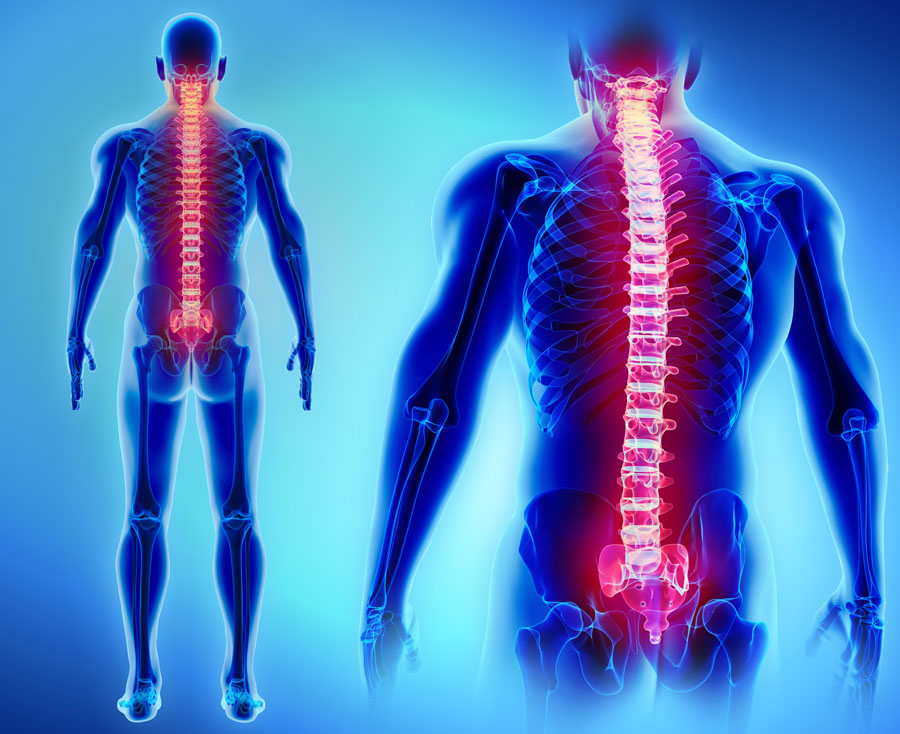
Now friendship, of course, is a two-way street. Reciprocity is a must. We give to be given to, in a spirit of natural kindness. And so it is with our once-in-a-lifetime bodies. Care for our body, that it cares for us. Which brings us to our all-important spinal column—our literal support system for carrying us through our world. For just as friendship taken for granted can become friendship lost, so a disregard for our spine can lead a cascade of issues. A cared-for spine will return the favor with a calmer nervous system, greater vigor and reduced discomfort. Let’s love our spine so it may love us back…

Spine, Spinal Column

Here’s a fun, simple movement to release and enliven our spine for today:

Stand with knees slightly bent and the arms at your sides. Swing your arms round to the left side, turning your waist in the same direction, while sinking your weight into your right leg. Reverse and repeat to the other side in a fluid, super-relaxed manner. Breathe softly. Continue for twenty to thirty reps each side. Have a hint of a smile on your face.

It feels great to have reconnected with my spine today—so we can heal ourselves together.

Filed Under: Spark Your Day Tagged With: breathing, movement, posture, spine

  • « Go to Previous Page
  • Page 1
  • Page 2
  • Page 3
  • Page 4
  • Page 5
  • Go to Next Page »

Primary Sidebar

About The Author

John Du Cane CubistStylePortrait316x400
Illustration by Judit Tondora

John Du Cane is a publisher and writer. He is the founder of Dragon Door Publications and is best known for having launched the modern kettlebell movement in 2001 and for the publication of the international bestseller Convict Conditioning. Most recently he collaborated with Debbie Harry on the writing of her New York Times bestselling memoir Face it.

Contact: support@johnducane.com

John Du Cane CubistStylePortrait316x400
Illustration by Judit Tondora

Contact: support@johnducane.com

Privacy Policy

Secondary Sidebar

Books

The Illustrated Wild Boy by John Du Cane

“An absorbing memoir perfectly complemented by exquisite art.” — Kirkus Reviews

“It’s rare to find a multifaceted short story collection of vignettes whose tales are equally well rooted in artistic, personal, and social observation. The result is a creative and involving work of art, language, and social inspection that will delight readers looking for literary works strong in spiritual and social revelations.” — Midwest Review of Books

Face It Debbie Harry

I spent around eleven months helping Debbie Harry with the writing of her memoir. Check it out and let me know what you think!

Books  |  Reviews  |  Blog  |  About  |  Contact


Copyright © 2026 John Du Cane