• Skip to primary navigation
  • Skip to main content
  • Skip to primary sidebar
  • Skip to secondary sidebar

John Du Cane

  • Books
  • Reviews
  • Blog
  • About
  • Contact

John Du Cane

The Pain Body

January 19, 2018 By John Du Cane

“The pain-body wants to survive, just like every other entity in existence, and it can only survive if it gets you to unconsciously identify with it. It can then rise up, take you over, ‘become you,’ and live through you.”—Eckhart Tolle

Residual emotional pain can lurk like a virus in our system, waiting to trigger and burst forth when we become suddenly vulnerable. Like a virus, there is a cunning intelligence to this “pain body.” And, like a virus, it is ever alert for the opportunity to gorge itself at our expense. When the pain body does have a breakout, the damage from the feeding frenzy can be expensive.

Some of us have relatively mild and quiescent pain bodies. They live deep within us and are rarely triggered. Others of us seem to be more like “pain bodies waiting to explode.” The rage, the fear, the hatred, the resentment seethe and simmer just below our surface—ready to leap from our throats, talons bared, at the slightest provocation.

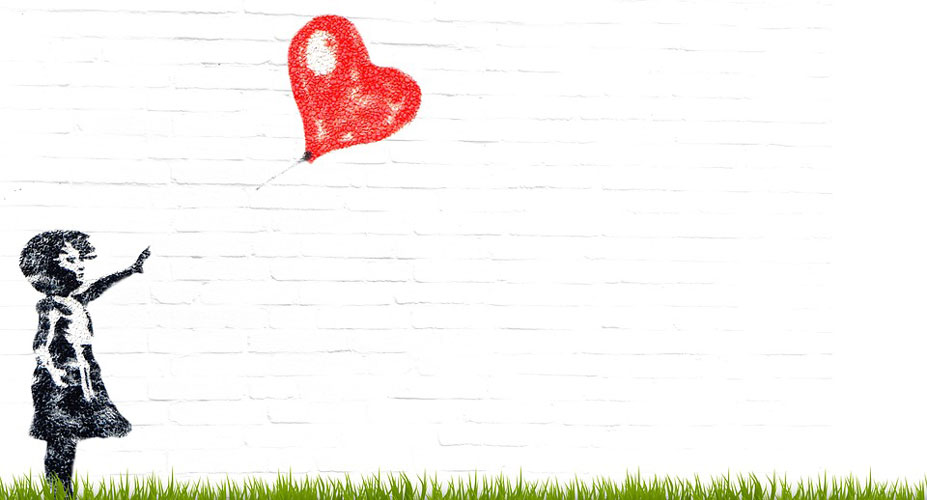
The Pain Body

In recovery, it is essential to build some skills against a sudden pain body attack. Or a pain body attack from another person. A major theme running through Spark Your Day is the need for us to be ever-vigilant in protecting ourselves against incipient vulnerabilities. A vulnerability not attended to in time, can lead all the way to a relapse, after all.

By its nature, the pain body can only grow when we feed it. If we are attacked by another person’s pain body eruption, by far the best strategy is to not give it juice. Just don’t respond. The pain body attack will dissolve through lack of reciprocity.

If the pain body attack is erupting from within us, then we have at best a few seconds to negate its impact—before we are overwhelmed and become its victim. Self-awareness is the ultimate self-defense against the pain body. Remaining fully aware—noting but not reacting to the proffered engagement—will burn away the pain body’s power. However, some of us may lack the meditative skills to pull that off successfully…

Here’s a movement/awareness/breathing exercise to help fortify our chances of vaporizing a pain body attack:

Stand relaxed with the feet shoulder-width apart. Place your attention in your stomach (where the attention goes, the energy goes). Take a long, slow, deep inhale that expands your stomach gently, like a balloon. As you perform this inhale, raise your right hand up and across your body until it is opposite your left shoulder.

During the movement, spiral the hand and arm as if screwing in a light bulb. When you reach the top position, your palm will be facing up toward the ceiling. Run your attention from your stomach, up your back, then through the arm and finally into the palm as you complete the movement.

Spiral your palm and arm down back to your right side, as you exhale. Reverse the flow of your attention, so you guide the energy back from the palm to the stomach. Repeat this movement ten times. Or more, if you want. Then switch to your left hand and repeat on the other side.

Don’t be surprised if your fingers and palms start to warm up and even tingle as you do this. That’s the breath and energy stimulating your blood flow. Which is a beautiful thing! Over time, performing this movement will leave you feeling a nice combination of relaxed and energized—the perfect defense against that pain body trying to disrupt your equanimity…

It feels so empowering to be able to relax out of my self-induced tension!

Filed Under: Spark Your Day Tagged With: breathing, energy, pain body, tension

Shame—And the Crisis of Being

January 18, 2018 By John Du Cane

“Shame is a soul-eating emotion.”—C. J. Jung

We feel guilty when we have done something we know is wrong. We crossed the line. We transgressed. Guilt can be the helpful signaling system that pushes us to correct the errors of our ways. Guilt can lubricate social friction and is beneficial in moderation—like most of the edgier emotions. Guilt is a good self-corrective course setter, to help us navigate our commitments in a responsible manner.

Shame, though, is another kettle of fish altogether… Shame strikes at the core of our being. It lessens us, derides us and would that we were dead. And shame brings out the worst in the bully, the predator and those who would bay with the hounds of the witch hunt. Shame can be enormously destructive. Enormously. There’s clearly a species-survival mechanism in place here—with a signal that warns us that we are “bad” to the core. “If you go on being this kind of a person, you endanger our tribe. Shape up or we’ll ship you out.” However, the cost-benefit ratio of this survival mechanism looks horribly skewed in practice, does it not?

Shame

Those of us in recovery are all too aware of shame’s power. After all, shame took the mother of all wrecking balls to our self-esteem, our dignity—our very essence. Some of us became not much more than shallow specters of our former selves, haunted by self-loathing and despair. We allowed shame to saturate our interior landscape—often freezing us into inaction for fear of being further shamed…

In recovery, we learned that the disease of our addiction had instigated much of our shame-causing insanities. We learned to take responsibility for our past aberrations, without wallowing in the associated shame-orama. As we stitched up the rags of our tattered psyches, we learned to be gentler and more forgiving of ourselves.

Sometimes, though, some event, thought, remark, slight, or memory can cause an unwitting flush of shame to burn back onto our cheeks. That burning feeling—it’s a warning sign and it’s a vulnerability to be taken care of promptly.

Here’s a formula we will make use of now:

Adjust the body, to adjust the mind, to adjust the spirit.

Stand tall. Stand relaxed. Put the hint of a smile on your face. Rotate your shoulders up, back and down. Press your shoulder blades close to each other. Hold the position for ten seconds. Relax and repeat for a total of ten times. Your chest will naturally expand somewhat and push forward. That’s fine and good. You may feel like a bit of a puffed-up peacock while you hold this position. Well, good for you! It makes for a nice antidote to the hunched, rounded shoulders and hangdog look of the shame-based profile. Let your body posture be your medicine for today…

It feels exhilarating to right now assert proud posture and a smiling self-confidence!

Filed Under: Spark Your Day Tagged With: posture, self-confidence, shame, shoulders

To Rest, To Renew, To Refresh

January 17, 2018 By John Du Cane

“Taking time to rest, renew, and refresh yourself isn’t wasted time. Recharge. Choose what energizes you.”—Melody Beattie

When we are addicted to exercise, taking time off can seem like a guilt-inducing betrayal. We can get real antsy sitting on our butt, rather than pushing the envelope physically, day in day out. We drive ourselves to accomplish something—anything—and of course the quest for the endorphin rush is never far from our minds. This drive to exercise is laudable. The drive to tear our body down without giving it time to restore itself—not so much.

Remaining resilient in our recovery requires a delicate toggling between the vigorous and the gentle. Too much, too often can result, too easily, in too little, too late… We hit the wall, we get hurt—and if we are not careful, our exercise program grinds to an unseemly halt. Self-care in recovery is a two-way street: make physical gains by challenging our systems. Then reward ourselves with a restorative healing process that will help consolidate those gains. The older we get, the more time we need for that restorative consolidation.

We inflict benign damage on our muscles to prod them into adaptive strengthening. Excellent! It’s a sort of induced, temporary state of vulnerability intended to reduce our longer-term vulnerability. That’s show biz… As guardians of our own recovery, we just need to be hyper-alert to our tendency to overdo it—and put ourselves potentially at risk.

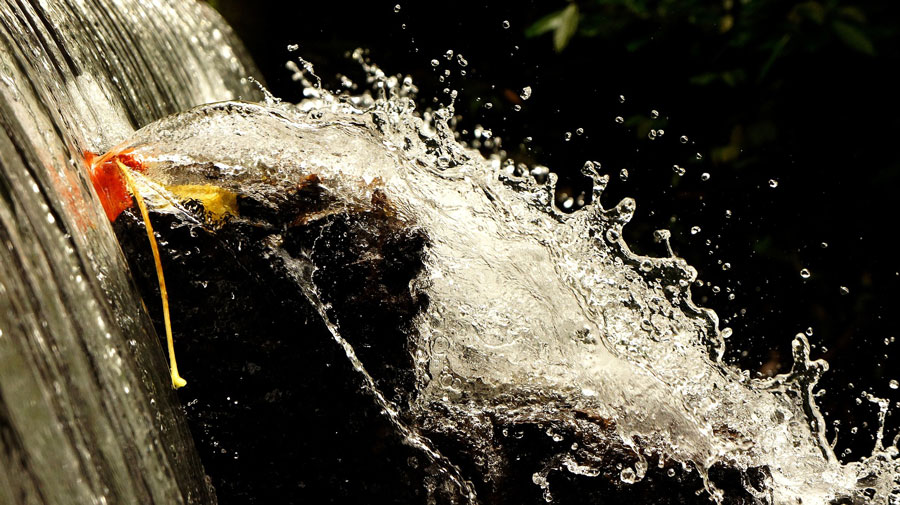
Refreshing Waterfall

So, the restorative movement today is mostly mental:

Stand in a relaxed posture with knees slightly bent and arms held slightly away from your sides. Take a long, slow inhale. As you inhale, use your attention to have the sense you are pulling energy through every pore of your skin, deep into your bones. Feel your entire body expanding, as if you were an inner tube being pumped up. Then exhale very slowly, sending the energy back out in all directions. Feel your body contract on the exhale. Repeat for at least ten iterations. Do as many more repetitions as you feel to.

This is a very powerful and wonderful practice. It’s a treasure. Practice it to know it and feel it… Your recovery will thank you for the care and attention!

I am taking the time to restore my energy, body and being by relaxing, resting and breathing.

Filed Under: Spark Your Day Tagged With: breathing, breathing exercise, movement, rest, restorative movement

The Giving Game

January 16, 2018 By John Du Cane

“The wise man does not lay up his treasures. The more he gives to others, the more he has for his own.”—Lao Tzu

In our using days, we tended to be hoarders and takers. We weren’t too famous for our philanthropic acts. When our lives were dominated by the bottle or the needle we were less into “sharing is caring” and more into “finders, keepers.” To give, felt dangerous. We would be risking our safety net. We would be leaving the door wide open—to be stolen from blind. Or so we thought.

What we discovered as we hit bottom, seemed counter-intuitive. The more we tried to keep, the more we lost. We were a fist tightening around sand—watching the grains spurt out from our grasp, the harder we squeezed.

In early recovery, we—perhaps rather grudgingly—accepted the gift of support and care from our new fellow travelers. As we grew in our recovery, we became ever more capable of reciprocating that care. We learned to love to give—for the sheer pleasure of the giving. And a magical thing started to happen for us: the more we gave freely from our hearts, the more we received back. A process we might once have dismissed as a spiritual cliché, became a self-evident truth… A remarkable and wonderful change.

Giving

As addicts, we would often write checks against our bodies that we could barely cash. We would rip off our own adrenals with the same negligence and disregard that we would rip off our friends and loved ones. We stole from our own energy with reckless abandon—depleting ourselves and putting our resilience at risk. In recovery, we need to give back as generously to own bodies as we now do to others. Here’s a squat variation that will help to energize and restore those depleted adrenals:

Stand about three inches away from a wall, feet facing forward and about six inches apart. Exhale as you slowly sink down into as low a squat as you can manage, while keeping your back relatively straight. The wall is in front of you to make sure you don’t lean forward too much while performing the movement. Inhale as you come back up.

According to Traditional Chinese Medicine, if we put our attention at the bottom of our feet and run our attention up our legs as we rise up, we will help enliven our kidney/adrenal energy. Our bodies can be considered as a series of ever-more-subtle hydraulic systems. When we perform this Wall Squat we are pumping the various levels of our hydraulics, be it the blood, the lymph or the chi… We influence the pumping by brute physical action, by breathing and by guiding the chi with our attention. The more you practice the attention part, the more natural and potent it will become. Just like the persistent activity of giving to others…

It feels so satisfying to be restoring my body by giving it the care and attention it deserves.


Filed Under: Spark Your Day Tagged With: gift of support, giving, squats, wall squat

The Terrible Twins

January 15, 2018 By John Du Cane

“I think of myself as something of a connoisseur of procrastination, creative and dogged in my approach to not getting things done.”—Susan Orlean

In recovery, when we baulk at a challenge, we are encouraged to “act as if” and “fake it till we make it.” This is particularly great advice when we look to handle an attack by the Terrible Twins. Ok, so we could use that moniker to describe a number of pernicious combos. For today, though the Terrible Twins are those undeniable and annoyingly persistent rogues, Perfectionism and Procrastination.

Procrastination feeds on fear. Fear of discomfort. Fear of difficulty. Fear of failure. Fear of conflict and confrontation. Fear of action. Perfectionism sprays gasoline onto the fire of Procrastination’s fear. Perfectionism grabs its twin by the wrist and whispers into its ear “It’s never going to be good enough, so why even bother to begin at all?” The twins feed each other’s frenzy to avoid jumping into action.

Lack of “right action”—even if it means the action of “acting as if’—is not a safe option for us in our recovery. It’s a must to keep on keeping on… and the magical thing is, by just doing something—anything—to handle the perceived challenge, good things start to develop—whether the Terrible Twins like it or not.

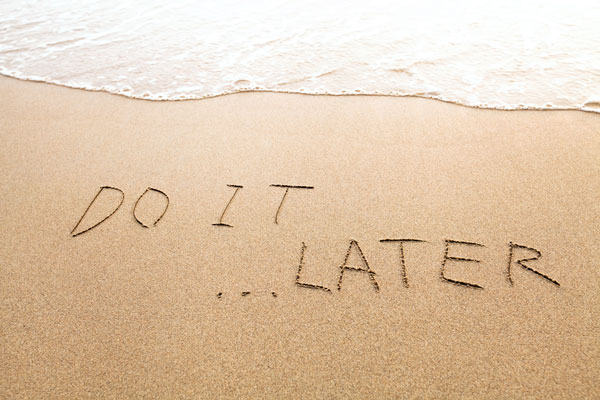
Procrastination

The secret here could be called Progressive Refinement. Begin with the battle cry “Good enough is good enough!” Surge forward and just start splurging into action—with no care as to how beautiful or ugly the action might appear to be… The Terrible Twins may kick and scream a while, but their annoying kerfuffles will start to fade away as you refuse to give them oxygen…

Your strategy of progressive refinement will initially yield you anywhere up to 80% of what you’d hoped for. That’s good enough—because at this point, good enough is good enough. The hard part’s over. Now you just wait a little, then jump in on a second round—refining your “good enough” material. Wait some more, then on to the next round of refinement… And to your pleasant surprise, in one tenth the time you thought it’d take, you’ve got it done!

For so many of us, taking action to stay fit brings on a major attack from the Terrible Twins—with Procrastination being the prime culprit of the two… (By the way, we’re over two weeks into our New Year’s Fitness Resolutions. How IS that going?)

Well, when it comes to movement priorities to take action on, it’s possible we most often ignore our hand-health. Too bad too—because when it comes to taking action, it’s all about our hands. And the beauty of it is that it is really, really easy to help our hands feel more mobile and pain-free.

Today’s movements will be a high-reward breeze:

Rotational joint exercises are a superb way to warm up, as well as to increase flexibility and reduce pain. The wrists are the gateway to our hands. To heal our hands, then we are going to rotate and open up the wrists. Whether from high-mileage exercise, compulsive keyboarding or sheer neglect, our long-suffering wrists can take quite the beating. Eventually—like any abused or neglected joint—they will not be shy to broadcast their displeasure! Better to be nice to your wrists up front, so they will be nice to you over the long haul….

Stand or sit with good posture. Extend your forearms in front of and at right angles to your torso, with your elbows resting gently on your stomach. Circle your hands at the wrist joints making a full 360-degree rotation. One hand will be rotating clockwise, the other counter-clockwise. Reverse directions. Do 24 to 36 rotations for each wrist. We will be revisiting other beneficial movements for the hands throughout the year…

It feels so relaxing to know I don’t have to go on trying to be perfect!

Filed Under: Spark Your Day Tagged With: fear of confrontation, fear of failure, perfectionism, procrastination

  • « Go to Previous Page
  • Page 1
  • Interim pages omitted …
  • Page 12
  • Page 13
  • Page 14
  • Page 15
  • Page 16
  • Page 17
  • Go to Next Page »

Primary Sidebar

About The Author

John Du Cane CubistStylePortrait316x400
Illustration by Judit Tondora

John Du Cane is a publisher and writer. He is the founder of Dragon Door Publications and is best known for having launched the modern kettlebell movement in 2001 and for the publication of the international bestseller Convict Conditioning. Most recently he collaborated with Debbie Harry on the writing of her New York Times bestselling memoir Face it.

Contact: support@johnducane.com

John Du Cane CubistStylePortrait316x400
Illustration by Judit Tondora

Contact: support@johnducane.com

Privacy Policy

Secondary Sidebar

Books

The Illustrated Wild Boy by John Du Cane

“An absorbing memoir perfectly complemented by exquisite art.” — Kirkus Reviews

“It’s rare to find a multifaceted short story collection of vignettes whose tales are equally well rooted in artistic, personal, and social observation. The result is a creative and involving work of art, language, and social inspection that will delight readers looking for literary works strong in spiritual and social revelations.” — Midwest Review of Books

Face It Debbie Harry

I spent around eleven months helping Debbie Harry with the writing of her memoir. Check it out and let me know what you think!

Books  |  Reviews  |  Blog  |  About  |  Contact


Copyright © 2026 John Du Cane