• Skip to primary navigation
  • Skip to main content
  • Skip to primary sidebar
  • Skip to secondary sidebar

John Du Cane

  • Books
  • Reviews
  • Blog
  • About
  • Contact

John Du Cane

The Healthy Shakes

January 9, 2018 By John Du Cane

“The taboo against full ecstatic expression of the human body is nothing mysterious or difficult to understand. . . . The oppressed find that shaking is a medicine for the suffering of the human spirit. It sets them free and opens the doors to the kingdoms of bliss. The shake comes as a great liberator to people in poverty, powerlessness, and suffering.”—Bradford Keeney

Might we still have some “bad juju” trapped in our unsuspecting flesh? When any of us suffer deep insult, the trauma of it can get trapped deep within the tissues. Those of us in recovery invariably have a heavy history of past trauma—and we are particularly susceptible to its insidious creep when unchecked… That trapped trauma can become a health time bomb if not addressed and released.

It might be a rape. It might be a mugging. It might be a surgery. It might be vicious verbal abuse. It might be a bad beating from a maddened parent. It might be a drug overdose. It can be anything that bludgeons us with a hard hurt.

That trapped trauma is ready to trigger when the button is pushed. Sometimes the trigger causes incremental bouts of micro-dysfunction. But sometimes the trigger causes a veritable firestorm of dysfunction—or the onset of serious disease.

Unlike other animals, most of us humans have lost touch with a remarkably effective, instinctual way to release from our trapped trauma. The birds know how to do it—and do it. The dogs know how to do it—and do it. Gazelles—they do it. You name it—they do it. Except for most of us—we mostly don’t do it.

What’s this forgotten “doing”, then? That would be a Shaking practice. Spontaneous shaking practices are an essential element of many shamanic traditions and other indigenous cultures. From ancient Chinese Qigong shaking, to the ecstatic shaking of the Kalahari bushmen, to the haunting shakes of the Native American tribes, to the Shakers and Quakers—the tradition runs on. However, the healing power of that shaking has not often been well articulated…

“Shaking out the spirits”—as it can be called—helps us to get out of our heads and gently start releasing those traumas within. Because it’s a slow, easy process and nothing is being forced, there is little if any chance of things going awry. We won’t necessarily know what has been released when, but you can trust that the magic is at work.

But most of us cerebral humans are too scared of losing control to shake it all out. We like to harbor our fears and hurts—and keep them stewing away beneath the surface. Out of sight, out of mind perhaps, in the short run—but with a heavy price to pay sooner or later when the jail break happens!

Healthy Shaking

Here’s your Shaking practice for today:

Stand in a relaxed posture. Close your eyes. Feel your body for a minute, scanning yourself with your attention from top to toe. As the mood takes you, start to shake your hands, then your arms, then your shoulders, then your torso, then your hips then your legs. Let your head gyrate and bobble of its own accord. There’s no right away, just keep shaking and shaking and shaking some more…

Continue for a few minutes, ten minutes, or even longer—until you feel complete. You may well feel wonderful surges of energy when you stop, a buzzing, a delightful tingling. You have just introduced yourself to the healing power of ecstatic shaking… Enjoy!

It feels so, so, so good to shake away my cares and troubles for the day!

Filed Under: Spark Your Day Tagged With: ecstatic shaking, energy, instinctual healing, mindfulness, movement, shaking, trapped trauma

Commit to Commit

January 8, 2018 By John Du Cane

“It takes a deep commitment to change and an even deeper commitment to grow.”—Ralph Ellison

It’s easy to flip the switch for change—when you have decided that there is no other decent option BUT to flip the switch. There is no such thing, after all, as a casual commitment… We are all in—or we are all out.

The commitment to sobriety is re-committed to day by day. No half-measures. No “just a little bit pregnant”. Nothing taken for granted. We stay clean—that’s what we do. Because we believe it’s what we need to do. We believe that clean is the only way to go, the only bearable way to be…

How do we strengthen that commitment? By persistently, consistently repeating the small steps of healthy habits—until it will feel like it would be an atrocity to abandon those habits.

Committing to a consistent movement regime can bolster our mental and emotional commitment to our recovery. Just promise yourself that there is a bare minimum you’ll get done every day, come what may…

You can set the minimum bar at any height you want. It might be just the one or two movements from Spark Your Day. It might be a round of Tai Chi. Five favorite Yoga stretches. Six mobility exercises. One strong strength building drill, for five hard reps. You get the picture. And naturally, if you miss the boat for whatever reason— and find yourself sloshing about in the water—well no reason to beat yourself up. Just note and re-commit for the next day… You’re still a good person…

We’re into our eighth day of the new year. How are those resolutions keeping up? Feel ready to test the strength of your commitment? Your resilience when faced with a challenge? Good! Then let’s jump in and up the ante for today’s “absolute minimum”.

We are going to revisit the infamous full bodyweight squat, but instead of the ten repetitions we did on January 2, we are going to aim for 30 reps this time. Are you already moaning and groaning? And we haven’t even begun? Come on! You can do this!

Full Squat Child

Each squat rep, you will be able to go a little bit lower—if you let yourself. When you arrive at a sticking point on your way down, tense your legs as much as you can for three seconds then exhale and release down another inch or two.

Take your time and keep good form. Keep breathing. If you need to hold on to a chair or table, then be my guest… Go as low as you can without hurting yourself. Discomfort will happen. That’s a good thing. Your body is being forced to adapt to the challenge. You’ll be stronger next time round. Just don’t injure yourself.

Here’s a reminder of how to perform a great full bodyweight squat:

Stand with your feet shoulder-width apart. Cross your arms over your chest and squat down as low as you can, preferably below parallel and eventually with your thighs touching your calves. Keep your knees from bowing in by aligning them with your feet. Keep your back as straight as possible. Come back up and lock out your legs and hips completely. Squeeze the muscles in your legs as tightly as possible for a second, relax and repeat the squat. Inhale and hold the breath as you descend. Exhale as you ascend.

Congratulations, you made it!

It feels great to strengthen my recovery by committing to and conquering a physical challenge.

Filed Under: Spark Your Day Tagged With: commitment, exercise, motivation, squats

Fret Not My Friend

January 7, 2018 By John Du Cane

“If you ask what is the single most important key to longevity, I would have to say it is avoiding worry, stress and tension. And if you didn’t ask me, I’d still have to say it.”—George F. Burns

Every emotion we possess is part of a complex signaling system which helps us adapt to and survive in our environment. When managed appropriately, even the most powerful emotions—like anger, fear and worry—protect us and make us stronger against threat.

When we were using, we often had the darnedest time managing our emotions—mismanage would be the better term! Instead of remaining the conductor of the orchestra of our feelings, we let ourselves get roughed-up by some out-of-control bully boys. We tend to label those bullies as “negative emotions.” More constructive, though, would be to view them as “emotions-gone-astray.”

Ruminating in moderation about past mistakes and craziness, can help us avoid similar scenarios in the future. But chronic rumination about past misdeeds can cripple us with a cascade of destructive stress-response chemicals.

Worrying in moderation can help us face potential future challenges with greater resilience. But chronic worry can create needless stress where none had to exist—again creating a destructive cycle of energy-sapping, if addictive, chemical surges.

stress and worry

In recovery, we have been given a number of tools to help safeguard us against our compulsive flirtation with those more volatile emotions. However, it can still often be exceptionally difficult for us not to get dragged down and beaten up by our worries and our regrets.

Here’s a powerful method that can short-circuit these bad boys in one fell swoop:

Lie down comfortably. Place your right finger-tips gently on your breastbone and place your left finger tips just below your navel. Inhale gently, while imagining that the breath is flooding into your heart area. Exhale gently as you send your attention into the stomach below your finger-tips. Where the attention goes, the energy goes. Repeat from five to ten times (or more if you like.)

Now cross both palms over your stomach. Using your attention in the same manner, inhale into your stomach. Then exhale into your stomach. Repeat from five to ten times (or more if you like.)

When you do this with good focus, you will effectively zap your brain’s support system for all that worrying and rumination. It’s like someone turned off the current—which is exactly what you did! You may be rather amazed at just how well this simple method can “take you out of your head” and into the calmer pastures of your heart and stomach.

I welcome getting out of my busy, busy head—so I can enjoy the pleasures of a less stressful day.

Filed Under: Spark Your Day Tagged With: breathing, breathing exercise, rumination, stress, worry

The Gentle Obsession

January 6, 2018 By John Du Cane

“For an artist, the absence of positive obsessions leads to long periods of blockage, repetitive work that bores the artist himself, and existential ailments of all sorts.”—Eric Maisel

Great stand-up comedians obsess about jokes. They are “jokes waiting to happen”. They are early warning systems for that first faint glint of humor—to be snagged, seized upon and worked up. Until eventually they arrive at the final, tingling pleasure of a joke well told.

The moment that hint of a joke pops into consciousness, they write it down, let it incubate, refine it, test it, practice it, then refine it some more. It’s a never-ending, obsessive love affair with humor creation.

And so it is with all great artists, musicians, writers, creators. Positive obsession is the driving force behind their art work for the ages.

In our using days, our major obsession was our drug of choice, right? Drugs were our life. We were a “drug-buzz waiting to happen”. We were consumed with the never-ending quest for the perfect chemical high. We obsessed over source, supply-chain, stash. We lived in constant fear of loss. Our happiness was measured by the shaking spoonful. We lived to drug… We were married to a relentless beast that had us by the throat…

In recovery, one of the best things we can do for ourselves is to redirect our previous obsession with mood-altering chemicals into a gentle obsession with mood-altering health practices. We can re-write the evolving saga of our bodies into a more poetic and pleasant journey.

If we can but taste again the beauty of our own body’s natural song, we can enjoy the gentler bliss of “health waiting to happen.”

For today, here’s a simple but very powerful breathing practice that can quickly make you feel wonderful:

Sit comfortably with good posture, or lie down and relax. Inhale deeply and quickly through the mouth taking in big gulps of oxygen. Exhale with vigor. Repeat 20 to 30 times. After the final exhale, hold the empty breath for as long as you can—without being too extreme about it. Allow some discomfort—but you know how we can be… easy does it, at a certain point, please!

dragon breathing

Do anywhere from just one set to five sets of this breathing. When you feel complete, close your eyes, relax and let yourself feel your body. Hang out in this place for as long as you want.

I love the blissful feelings that come from simply breathing well.

Filed Under: Spark Your Day Tagged With: breathing, breathing practice, positive obsession, recovery

My Dear Spine

January 5, 2018 By John Du Cane Leave a Comment

“Look well to the spine for the cause of disease.”—Hippocrates

What are we in recovery, without our support systems? We learned through bitter trial and error that handling our challenges alone could be a perilous choice. Loneliness can dog us into risk. A compassionate group of friends can maintain and comfort us when we struggle. Without a good support network, we can “lack the spine” to overcome our obstacles. With a good set of friends, we can have the backbone to face any adversity with confidence and resolve.

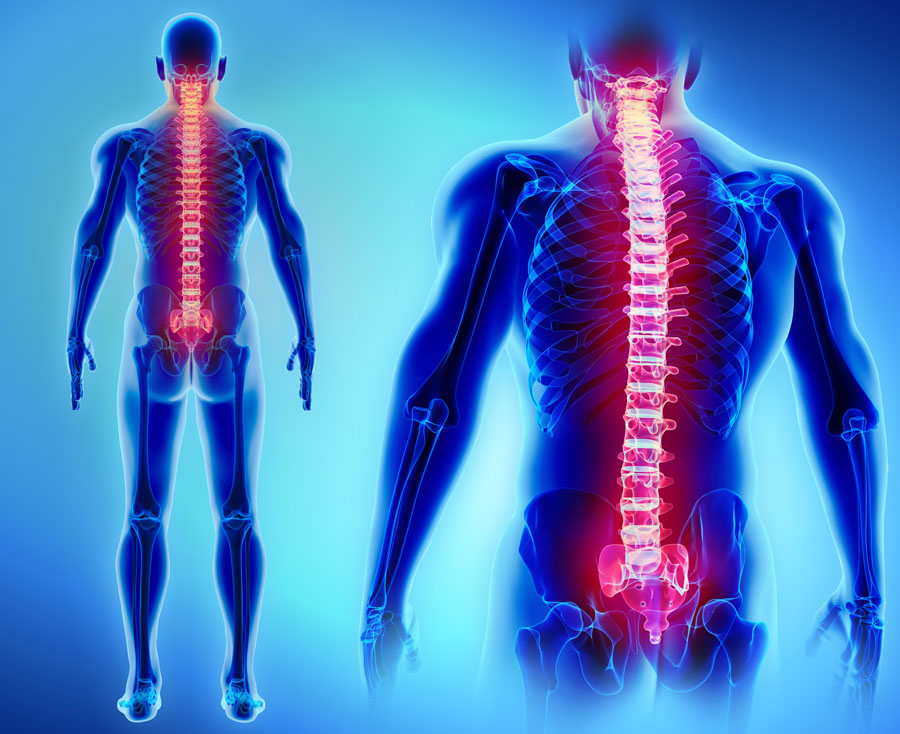
Now friendship, of course, is a two-way street. Reciprocity is a must. We give to be given to, in a spirit of natural kindness. And so it is with our once-in-a-lifetime bodies. Care for our body, that it cares for us. Which brings us to our all-important spinal column—our literal support system for carrying us through our world. For just as friendship taken for granted can become friendship lost, so a disregard for our spine can lead a cascade of issues. A cared-for spine will return the favor with a calmer nervous system, greater vigor and reduced discomfort. Let’s love our spine so it may love us back…

Spine, Spinal Column

Here’s a fun, simple movement to release and enliven our spine for today:

Stand with knees slightly bent and the arms at your sides. Swing your arms round to the left side, turning your waist in the same direction, while sinking your weight into your right leg. Reverse and repeat to the other side in a fluid, super-relaxed manner. Breathe softly. Continue for twenty to thirty reps each side. Have a hint of a smile on your face.

It feels great to have reconnected with my spine today—so we can heal ourselves together.

Filed Under: Spark Your Day Tagged With: breathing, movement, posture, spine

  • « Go to Previous Page
  • Page 1
  • Interim pages omitted …
  • Page 14
  • Page 15
  • Page 16
  • Page 17
  • Go to Next Page »

Primary Sidebar

About The Author

John Du Cane CubistStylePortrait316x400
Illustration by Judit Tondora

John Du Cane is a publisher and writer. He is the founder of Dragon Door Publications and is best known for having launched the modern kettlebell movement in 2001 and for the publication of the international bestseller Convict Conditioning. Most recently he collaborated with Debbie Harry on the writing of her New York Times bestselling memoir Face it.

Contact: support@johnducane.com

John Du Cane CubistStylePortrait316x400
Illustration by Judit Tondora

Contact: support@johnducane.com

Privacy Policy

Secondary Sidebar

Books

The Illustrated Wild Boy by John Du Cane

“An absorbing memoir perfectly complemented by exquisite art.” — Kirkus Reviews

“It’s rare to find a multifaceted short story collection of vignettes whose tales are equally well rooted in artistic, personal, and social observation. The result is a creative and involving work of art, language, and social inspection that will delight readers looking for literary works strong in spiritual and social revelations.” — Midwest Review of Books

Face It Debbie Harry

I spent around eleven months helping Debbie Harry with the writing of her memoir. Check it out and let me know what you think!

Books  |  Reviews  |  Blog  |  About  |  Contact


Copyright © 2026 John Du Cane