• Skip to primary navigation
  • Skip to main content
  • Skip to primary sidebar
  • Skip to secondary sidebar

John Du Cane

  • Books
  • Reviews
  • Blog
  • About
  • Contact

Spark Your Day

Hypocrisy

February 23, 2018 By John Du Cane

“Hypocrisy is the art of affecting qualities for the purpose of pretending to an undeserved virtue. Because individuals and institutions and societies most often live down to the suspicions about them, hypocrisy and its accompanying equivocations underpin the conduct of life. Imagine how frightful truth unvarnished would be.”— Benjamin F. Martin

Many of us have been two-faced in our lives—but those of us who succumbed to addiction elevated being two-faced to a high art form. We wheeled and dealed behind our shifting masks in a dizzying display of duplicity that had even the most seasoned con men shaking their heads. We were the great pretenders on the stage, acting out virtues that we did not have rightful claim to. We were the great deceivers, ever-ready to mimic to the gullible what we believed they wanted to hear. We did not mean what we said—and we never said what we meant. We were the hypocrites—holding truth hostage to the demands of our addiction.
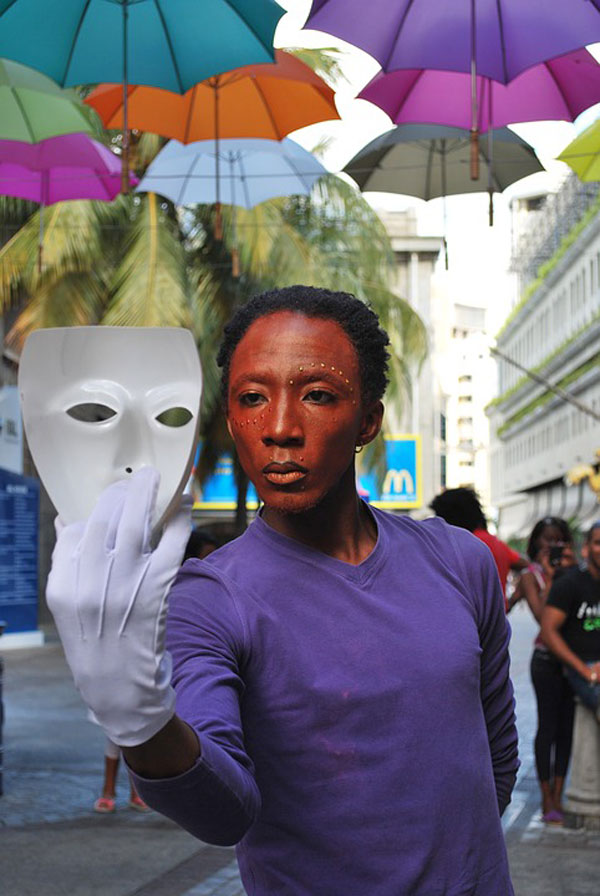
Hypocrisy 600

Yes, in our using days, weren’t we just so slick and smug—as we oiled our way from one shady transaction to another? Finally though, we found ourselves in a hall of cracked mirrors, pursued and mocked by demons that were the shades of our various pretenses. Our game faltered and fell apart… Our hypocrisies began to unravel. Our souls split apart. We were exposed. Now came the catcalls and the boos and the shame-mongering, as we were driven from the stage. Our world had cracked. And only a radical decision to seek help could restore us to sanity. We accepted that help and we began our recovery.

And we came to see—as we progressed in our recovery—that hypocrisy had no place in a healthy program. We decided to preach only what we could practice—and we practiced so the practice could allow us to preach more boldly… This way lay wisdom, lay peace, lay serenity, lay the simple pleasure that comes from aligning our words with our actions. And the beauty too, was how much less effort it took to be true to ourselves…

Today, let’s reflect for a few moments on the extent to which we are well aligned in how we present to the world. Might there still, perhaps, be some lurking hypocrisy that could be shown the door? All good then, all good…

We can be out of alignment physically as much as spiritually, of course. Serious physical mis-alignment can benefit from skilled bodywork, but there can be simple, effective ways for us to adjust ourselves. And when we adjust ourselves physically, there is often a carry-over into an emotional-spiritual re-alignment. Here’s what we’ll do today:

Sit, if you are not already sitting. If you just sat down or up—or you were already seated—notice every element of your current posture, before you change anything. Are you slumped over, spine bent? Is your head hanging forward on your protesting neck? Are your shoulders hunched? Is one shoulder higher than another? Are you clenching your jaw? Squinting?

You get the picture… Now, start straightening up— relaxing and rebalancing whatever is obviously tight or out of whack. Once you have completed your re-posturing, put a light smile on your face, close your eyes and simply be with your new alignment. Breathe gently. Rest in yourself for a while. When you feel complete, open your eyes and move on with your day.

I am aligned and appreciate the peace that descends upon me from the feeling of being true to who I really am, right now, this minute.

Filed Under: Spark Your Day Tagged With: alignment, balance, hypocrisy, posture, relaxation

Confidentially Yours

February 22, 2018 By John Du Cane

“Confidentiality is a virtue of the loyal, as loyalty is the virtue of faithfulness.”—Edwin Louis Cole

At one time, we may have lived in a world where we felt it unsafe to share any of our secrets with anyone. Too much was at risk, we thought. We trusted no none—including ourselves. Confidentiality was for the birds… Our loyalty and our faithfulness was only to our drugs of choice, when it came down to it. We would betray others to protect our addiction—and we would assume that our own betrayal was just around the corner.

However, there can be great pain and loneliness when we have no one we trust to confide in. There is great solace in sharing our intimate hopes, fears and dreams with a loyal friend, mentor or loved one. We are finally alone in this world—but the loyal listener can embrace us with their kindness and support, giving us strength to continue when the going gets rough.

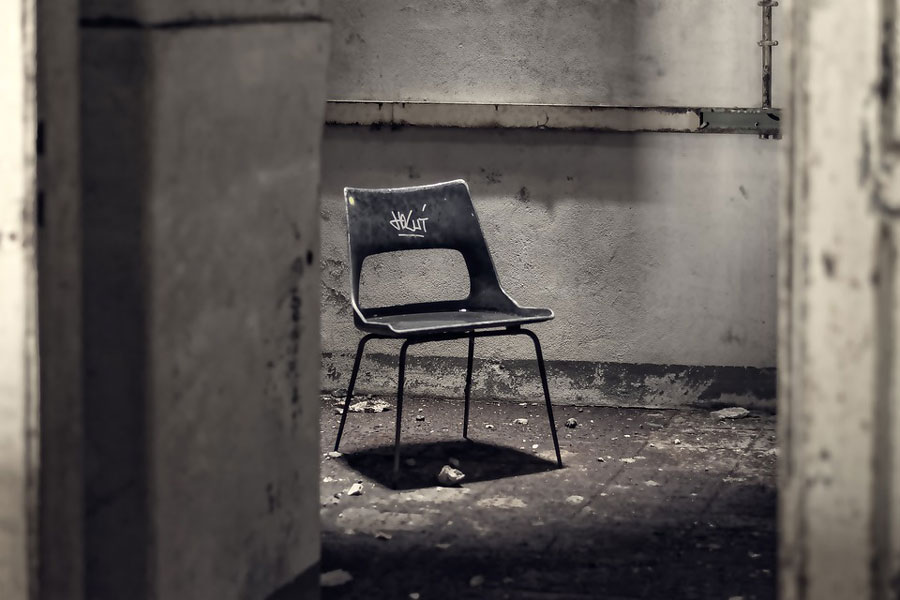
Let us not be like an empty chair in an abandoned, dank and dirty cell. Let’s welcome, instead, the round table of confidants, of companions in a living room of soft and colorful beauty.

Confidentiality

In our recovery, maintaining confidentiality is vital to our sense of safe growth. To know we have a safe haven in which to share our darkest history and most painful vulnerabilities, is to know we have friends who have our backs. No more knives flashing in the closet, no more excited, whispered betrayals, no more wrenching disloyalties. We create, instead, a climate of trust. Yes, as the frail spirits we all are in certain moments, this trust can sometimes falter, breaches happen. Yet the overwhelming message is one of security, of confidence in each other.

Today, let’s reflect on a secret issue that we may be harboring still—and which could benefit from some friendly light being spilled upon it. And who might we most safely share this with? Great…

Speaking of friendly light, let’s perform an “internal” movement to absorb some healing radiance into our bodies:

Stand, sit or lie in a comfortable position. As you take a long slow inhale, sense that you are drawing this radiant light through every pore of your skin, deep into your body. Before you exhale, feel for any area of your body that seems to be holding some special discomfort. Now, as you exhale, draw all that gathered light, focus on the troubled area, and beam the healing light toward it. Use your attention. The light will follow the direction of your attention. Relax a few moments with your breathing paused. Continue with another nine such breath-and-movement cycles…

I relax into my radiant body and feel content.

Filed Under: Spark Your Day Tagged With: breathing, breathing exercise, confidentiality, light, trust

Reward or Treat?

February 21, 2018 By John Du Cane

“A ‘treat’ is different from a ‘reward,’ which must be justified or earned. A treat is a small pleasure or indulgence that we give to ourselves just because we want it. Treats give us greater vitality, which boosts self-control, which helps us maintain our healthy habits.”—Gretchen Rubin

Imagine eavesdropping, at the airport lounge, on this exchange between a distinguished, elderly English couple:

“Darling, do I like chocolate?”

“Yes, darling, you rather do.”

Man reaches an elegant hand into his waistcoat and withdraws a handsome, gold-flecked bar of dark chocolate. Man breaks an angular piece and places it into her outstretched palm. She slides the piece appreciatively into her mouth. Man breaks off a second—rather larger—piece and raises it to his lips.

There is a contemplative silence as the couple savors the deep, rich tones of the chocolate as it melts down their throats. They look at each other. “That was rather good, darling, wasn’t it?” She doesn’t reply, but her eyes smile back at him.chocolate treat or reward

In our recovery, we may get anxious sometimes about treating ourselves with risky indulgences. We may have had difficulty in the past controlling our appetite for the delicious. By the nature of our addiction and compulsions, some pleasure hit was never enough—we always wanted more and more. What may have started out as an innocent treat, became a wild act of excess. In this protective reaction, however, we can become overly rigid in what we now deny ourselves. Chemical dependence makes it mandatory that we consider alcohol, nicotine and other drugs an absolute no-no. However, that doesn’t mean we have to act like cave-bound ascetics, shunning all earthly delights.

In fact, a wonderful way to stay resilient in our recovery is to keep treating ourselves—on a regular basis—to small, safe delights. These delights comfort us and can protect us from a propensity to over-control our natural impulses.

So, let’s reflect on what kind of safe treat we can indulge in today—just because. Just for the pure pleasure of the experience. Good…

Some movements can feel more like a treat than others. Here’s one that almost always feels like a treat:

Stand relaxed with the feet shoulder-width apart. Place your attention in your stomach (where the attention goes, the energy goes). Take a long, slow, deep inhale that expands your stomach gently, like a balloon. As you perform this inhale, raise your right hand up and across your body until it is opposite your left shoulder.

During the movement, spiral the hand and arm as if screwing in a light bulb. When you reach the top position, your palm will be facing up toward the ceiling. Run your attention from your stomach, up your back, then through the arm and finally into the palm as you complete the movement.

Spiral your palm and arm down back to your right side, as you exhale. Reverse the flow of your attention, so you guide the energy back from the palm to the stomach. Repeat this movement ten times. Or more, if you want. Then switch to your left hand and repeat on the other side.

I savor the delights of the sensuous—and my recovery is the stronger for it.

Filed Under: Spark Your Day Tagged With: comfort, reward, savoring, treat

Opportunity Cost

February 20, 2018 By John Du Cane

“There is an opportunity cost for everything we do. This is why we must have the awareness to ensure that what we are pursuing is really what we value, because the pursuit leaves countless lost opportunities in its wake. We choose one experience at the sacrifice of all other experiences”—Chris Matakas

What do you want? The potato or the stack of quarters? Everything we choose comes at a cost. Choose one thing and we have lost the opportunity for another. We give up one value to obtain another. Such is the transactional life—we are the spoon, balanced on the calculator, weighing our options.

Opportunity cost

Now, in those bad old using days, our spoon was teetering all over the place. We really had only the one opportunity we wished to pursue—and that was the opportunity to get smashed, blitzed, stoned, obliterated, numbed, whacked out or jacked up. Pursuing the addiction-fulfillment opportunity to the max meant a massive opportunity cost in unattended relationships, broken commitments, erratic work habits, financial debt and a host of other life-deficiencies.

We paid an opportunity cost too with our health as we burned the candle at both ends and drained our energy reserves. In other words, we valued the altered state above all else—and paid an increasingly steep opportunity cost to support that primary value.

In recovery, we learned to recover our values balance. We became more delicate and more aware about the values we pursued. In fact, these new values and this new sense of balance became essential to our ongoing serenity. We paused more and became more considerate in our choices. We became more attentive to how our decisions affected not only our own opportunity cost but the opportunity cost of others. We no longer saw ourselves as terminally unique. We were connected to a fellowship of support. We listened to our shifts in balance and made the necessary course corrections to stay on track.

The more we work recovery skills of this kind, the more they work for us. For it to work, we work it.

Today, let’s reflect for a moment on how well our value-choices are supporting our balanced recovery. Are we making any choices that may be costing us a finer, safer opportunity of another kind?

To emphasize this contemplation on a physical level, let’s do this simple but often surprisingly challenging movement:

Begin by standing with your feet about six inches apart. Now, raise the right leg, bent at the knee, to about hip height. Bring your arms out to the sides, until they are fully extended at shoulder height. Close your eyes. Breathe gently and hold this position as you count to 60. Open your eyes and bring your right leg down. Repeat with your left leg. If you find it challenging to balance on one leg with your eyes closed and think you might even fall over, rest one hand on the back of a chair. The more you practice the better your balance will become.

I am happy to be choosing values that better support my serenity and which enhance my sense of safety.

Filed Under: Spark Your Day Tagged With: movement, opportunity cost, safety, values, weighing options

Cellular Cravings

February 19, 2018 By John Du Cane

“You don’t want to love—your eternal and abnormal craving is to be loved. You aren’t positive, you’re negative. You absorb, absorb, as if you must fill yourself up with love, because you’ve got a shortage somewhere”—D. H. Lawrence

Do we have a shortage somewhere? A shortage that is creating an insatiable craving for more and more and more and more? Are we yearning for some ineffably deep connection that will finally make us whole? Are we pacing the streets of hope, umbilical cord in hand, looking for a place to plug it in? Such a condition is common to most mankind, but is particularly prevalent in those of us with a propensity to addiction.

In our using days, our cells were afire in a frenzy of unabated craving. Thousands upon thousands of starving creatures teamed within us, it seemed, with an insatiable appetite for the sweet succor of an endorphin hit. And more distressing yet, the more we fed the ravenous crowds of creatures, the more they multiplied within us—until a veritable army of desperados was set to storm the gates.

Cravings

As we moved into recovery, the debris of the creature wars lay all about us. We, the stunned survivors, could only shake our heads at the severed limbs, the smashed heads, the broken bones, the screams and cries of agony. Fortunately we were now connected to a fellowship that could help us gently and slowly pick up the pieces, clean up the battlefield and start our healing journey.

And also fortunately, help is at hand to start handling our cellular cravings so we can be less easily tipped into a risky neediness. Consistent meditation and movement can initiate a cascade of healing hormones within our bodies. As we regain the capacity to care and love, that care and love given and received initiates further benign cascades. Now the creatures are being fed with foods that don’t inflame them and stress them out. The creatures feel comforted—and at least to some extent—satisfied. We can relax into our beings and live in the moment more easily…

Today, let’s consider recommitting to activities that can have a healing impact on our creatures’ appetite. Let’s look at least one activity, in particular, that we could incorporate into our daily health regimen. And by “health regimen” we are naturally referring to the whole spectrum: body, mind and spirit…

Here’s one possible activity to consider:

Stand with your heels together, feet angled out at 45 degrees, knees slightly bent. Hold the hands at groin level just off the body, palms facing up, in a cup-like position. Inhale as you slowly raise your palms to upper chest level, exhale as you lower your hands back to your starting position.

Further enhance the movement of breath and energy by placing your attention initially at the base of your spine, then running it up to the top of your head on the inhale. On the exhale, run your attention down the front of your body to just below your navel. Do 10 or more repetitions.

I enjoy the feeling of tranquility that comes from calming down my creatures.

Filed Under: Spark Your Day Tagged With: breathing, breathing exercise, care, cravings, energy, love

  • « Go to Previous Page
  • Page 1
  • Page 2
  • Page 3
  • Page 4
  • Interim pages omitted …
  • Page 12
  • Go to Next Page »

Primary Sidebar

About The Author

John Du Cane CubistStylePortrait316x400
Illustration by Judit Tondora

John Du Cane is a publisher and writer. He is the founder of Dragon Door Publications and is best known for having launched the modern kettlebell movement in 2001 and for the publication of the international bestseller Convict Conditioning. Most recently he collaborated with Debbie Harry on the writing of her New York Times bestselling memoir Face it.

Contact: support@johnducane.com

John Du Cane CubistStylePortrait316x400
Illustration by Judit Tondora

Contact: support@johnducane.com

Privacy Policy

Secondary Sidebar

Books

The Illustrated Wild Boy by John Du Cane

“An absorbing memoir perfectly complemented by exquisite art.” — Kirkus Reviews

“It’s rare to find a multifaceted short story collection of vignettes whose tales are equally well rooted in artistic, personal, and social observation. The result is a creative and involving work of art, language, and social inspection that will delight readers looking for literary works strong in spiritual and social revelations.” — Midwest Review of Books

Face It Debbie Harry

I spent around eleven months helping Debbie Harry with the writing of her memoir. Check it out and let me know what you think!

Books  |  Reviews  |  Blog  |  About  |  Contact


Copyright © 2026 John Du Cane