• Skip to primary navigation
  • Skip to main content
  • Skip to primary sidebar
  • Skip to secondary sidebar

John Du Cane

  • Books
  • Reviews
  • Blog
  • About
  • Contact

Spark Your Day

Watering and Weeding

January 24, 2018 By John Du Cane


“The height of cultivation always runs to simplicity.”—Bruce Lee

If we want to cultivate a beautiful garden, we commit to regular, conscientious care. Dumping a truckload of water once a year is not going to cut it. Nor is once-a-year weeding. Rather, we water and weed with consistent moderation. Feeding and clearing, feeding and clearing. The pleasing riot of color we wished for can then stand forth against its green, clean backdrop…
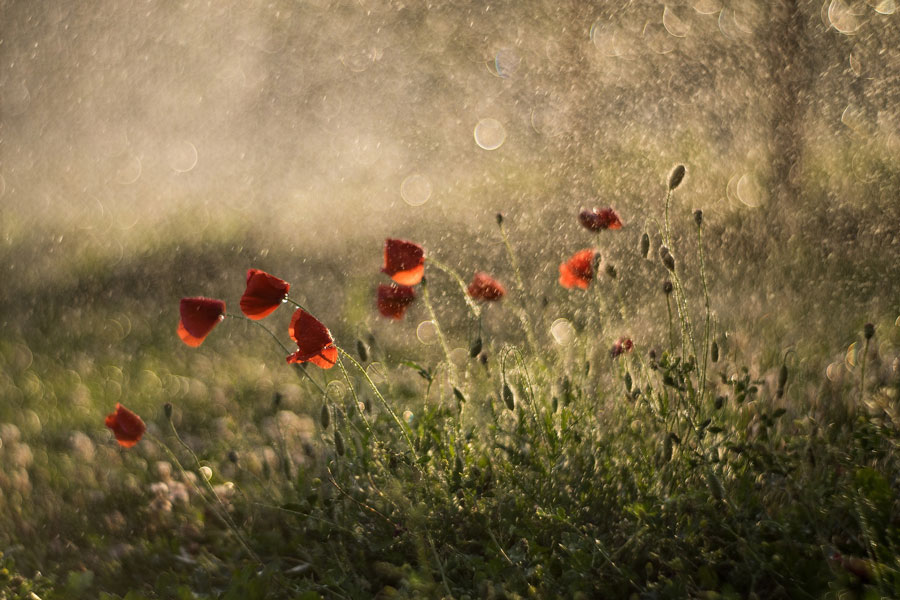
Watering Weeding

The deeper we cultivate our recovery, the simpler the recovery becomes. Simple, yes, but simple from diligent, persistent, wise effort. We become what we continue to cultivate. This way, the tortured complexities that choked off our serenity can be cleared away—to allow our simpler, stronger nature to blossom out.

So, yes, the practice of recovery is an attentive, daily practice. We cultivate our spiritual muscularity and emotional resilience by facing up every day to cleansing and feeding our inner beings. And, along with our inner beings, we care on a daily basis for our bodies, our outer beings, as it were… It is good to match inner and outer care. Lack of diligence in the one can easily transfer to lack of diligence in the other. Such lack of care can lead to stagnation and a slow deterioration of our composite well-being. In recovery, we can ill afford to take risks with our well-being, whether inner or outer…

Movement means life. And in recovery, daily physical movement is a must, when it comes to the “weeding and the watering”… Because, when we move, we stimulate the healing flow of fresh blood throughout our system. We stimulate synovial fluids in our joints—helping to reduce pain and discomfort. Movement with good breathing stimulates the lymph system, helping it to flush out the toxic crud which inevitably accumulates within us. It doesn’t have to be much, but let’s move some every day…

Here’s an easy, natural-feeling movement that will calm you and energize you simultaneously:

Stand in a relatively wide stance, knees bent so the thighs are at about a forty-five-degree angle. Tuck your butt under, so it’s not sticking out. Feel your thighs somewhat challenged in the stance. Keep the knees aligned with your feet. Start with your palms facing up in front of the stomach. On a long, slow inhale, raise your hands in front of your torso, above your head, slowly turning the palms, so they are facing away from you at the top-most position. On a long, slow exhale, circle your palms out down and around until they arrive in front of the stomach.

Now, reverse the sequence:

On a long, slow inhale, circle the palms out to the side and up until they are above your head. On a long, slow exhale, bring the palms down in front of your torso until they are at stomach level. Rotate the palms as they descend, so they are facing down when you complete the movement.

Start over with another sequence and repeat for a total of eight or more sequences.

It feels so good to be clean and energized today.

Filed Under: Spark Your Day Tagged With: breathing, breathing exercise, cultivation, energy, lymphatic system, movement, simplicity

The Power of Positive Regret

January 23, 2018 By John Du Cane

“Make the most of your regrets; never smother your sorrow, but tend and cherish it till it comes to have a separate and integral interest. To regret deeply is to live afresh.”—Henry David Thoreau

There’s a much-loved line in an old French song by Edith Piaf: “Je ne regrettte rien”, or, in English “I regret nothing”. While this is a laudable sentiment, it begs a bigger picture—particularly for those of us in recovery. For regret can be the very stuff of healing. The sociopath may feel no regret for his actions—because he is simply incapable of feeling. To regret is to acknowledge an error—to learn from it and to commit to a wiser path in the future. No regrets—perhaps, no lesson learned, no wisdom gained?

Regret

Like so many emotions in recovery, regret is a feeling to be handled with kid gloves. Moderation is everything. We balance between the need to acknowledge our mistakes and the compulsion to wallow in self-recrimination. Too much handwringing can lead us to the edge of relapse. Too little courage to face our faults and too little determination to make course corrections, can crimp the progress of our recovery. We step with care on the jungle path, alert, paying attention to the signals and responding appropriately…

Welcome then, to the notion of “positive regret.” Let’s take a minute to identify some serious mistake we made in the past. A mistake whose memory still snaps at our heels, dogging us with unease. Let’s take a minute to see the mistake for what it was: a mistake. Note the lesson—and what we’re going to do different next time round. Watch that mistake as it floats away downstream and now forever out of sight… Excellent! What a relief!

The ancient art of letting go came to our rescue once again. The ancient art is good that way: always ready to give a helping hand if we only just ask!

Here’s a movement to smile with, as you practice your positive regret:

Stand or sit with good posture, shoulders relaxed. Tilt your head back so you are looking up at the ceiling. Stay comfortable in the movement. Then, bring your chin as close to your chest as you can manage—without moving any other part of your body. Inhale up, exhale down. Do ten or more repetitions. By the way, this movement is superbly healing when it done on a regular basis. Consider doing it every day…

I feel complete as I acknowledge, learn from and let go of an old regret.


Filed Under: Spark Your Day Tagged With: breathing, breathing exercise, healing, lessons, regret

Redemption

January 22, 2018 By John Du Cane

“No person and no character is beyond redemption, ultimately. That’s the great thing about playing a character that has kind of a dark side; there’s room to explore the opposite.”—Murray Bartlett

We lurched down into the darker reaches of despair, dragging our misdeeds in a bundle behind us. We were the despised ones. The “sinners”. The mongers of harm. The bad boys and girls who had hit bottom—and seemed doomed to end their days in unforgiven suffering. Such have been the stories of so many of us addicts and alcoholics, as we careened through our ever-more dysfunctional lives. Hope was a cruel joke played at our expense. We saw no light at the end of the tunnel. Just a darkening and a darkening of the gloom…

Then a miracle might have happened. A helping hand from out of nowhere. A band of friends and loved ones who saw beyond the exterior shambles to the trembling beauty beneath. We were dragged—often unwitting, often in resistance—to some kind of healing haven where we were given the chance for a new beginning. Our shackles began to fall away. We began to move again with a sense of purpose and hope. We were on the path of recovery—and the opportunity to redeem our past insanities…

Redemption

Being passive receivers in recovery doesn’t cut it, if we want to be resilient in our recovery. Instead—out of gratitude for the rescue—we can redeem ourselves by giving back. We can give back with the gifts we can best bestow on our others. Let’s take a moment to meditate on the gifts we have to offer. Our skills. Our special talents. Our hard-won wisdom. Our new-found care and love. The path to redemption—and therefore to a more robust recovery—can be trod step by giving step…

As we continue to reflect on the gifts we can give to others, let’s perform this simple, yet exhilarating movement:

Stand hip-width, knees slightly bent, arms to the sides. Bring the arms all the way above the head, palms facing away from you. Rise up on the balls of your feet, as your arms go up. Sink back down as your arms descend to their original positions. Inhale deeply as you raise your arms above your head. Exhale as you lower your arms and sink back down. Repeat for a total of ten repetitions. As usual, do more reps if the mood takes you.

I am excited to contemplate the many gifts I have to offer others.

Filed Under: Spark Your Day Tagged With: giving back, hope, redemption

Respect Regained

January 21, 2018 By John Du Cane

“If you want to be respected by others, the great thing is to respect yourself. Only by that, only by self-respect will you compel others to respect you.”—Fyodor Dostoyevsky

When you look at your naked body in the mirror, do you avert your gaze? When you stare into your soul, do you grimace at what reflects back at you? When you watch your thoughts go tumbling through your noggin, do you sneer in disdain? Or—for all the cracks in your teacup—can you still respect your body, your soul, your mind?

Now, respect—like beauty—is in the eyes of the beholder. We respect what we interpret to respect. Respect means to “look back at”, but that “looking back” is colored by the shifting rainbow of what we value. Respect is an estimation of worth—and that estimation is as individual as the grains of sand on a beach.

We can respect ourselves—but fear ourselves. We can respect others—but fear them. Others can respect us—but fear us. So too, can respect co-exist with hate. We see the worth, we acknowledge the worth, but we don’t necessarily love the person.

Respect

Respect for ourselves is hard-earned and easily lost. Respect from others—that’s hard-gained too—and most easily squandered. Respect for others—that takes work too. Respect that comes easy—in any dimension—is respect whose mists will vaporize with the morning sun…

The recovery process is—as much as anything—the process of regaining respect for ourselves—that others may then regain their respect for us. The shards of our shattered self-respect laid all about us. Slowly we picked up the pieces—with the help of our friends, our loved ones and of the fellowship… And we learned that—for all the pain—it’s never too late to earn back our worth as human beings. To earn back respect for ourselves—and to be respected back in turn.

Today, then let’s do an exercise that strengthens simultaneously three parts of our body that can so easily be disrespected: our abs, our butt and our back. Saggy butt? This will fix it. Bent-over back? This will fix it. Flabby abbies? This will fix it.

Lie on your back with your hands clasped on your stomach. Bend your knees so that your feet, at hip-width, are relatively close to your butt. Lift the hips and lower back off the ground, so your head, shoulders and feet support your raised body. Press your hips up as much as you can, tighten your butt muscles and abs for a couple of seconds, relax and lower yourself down slowly. Inhale and hold the breath before you rise up, exhale on the descent. Do 10 repetitions. Or more, if you can manage it.

It feels terrific to respect my own body—by giving it the elegant form it deserves.

Filed Under: Spark Your Day Tagged With: respect, self-respect

The Trick to Recovery Is Having Some

January 20, 2018 By John Du Cane

“For every action, there is an equal and opposite reaction.”—Sir Isaac Newton

Besides the money, we have spiritual and physical bank accounts. As with the financial, it’s prudent to make regular savings deposits, spiritually and physically, against those inevitable rainy days. In our recovery, we place rightful emphasis on the need to build up our spiritual account. It’s hard to beg and borrow your way to a robust recovery…

However, many of us in recovery have not been so adept at building up our physical health account. This can have unfortunate consequences. While we can never do more than stack the health deck in our favor by regular exercise and sensible diet, having no deck of cards to speak of can be a grim alternative. Nature loves to slap us around the face or kick our legs out from under us, every now and then—just to show who’s boss. If we don’t—or simply can’t—bounce back up from those mischievous hits, we can be in a world of hurt. Hurt that might threaten the stability of our serenity.

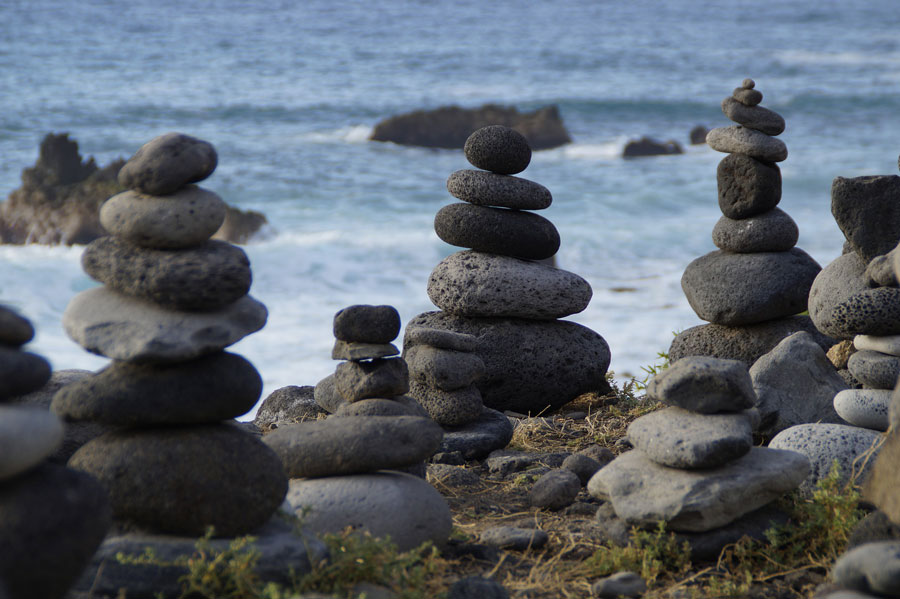
Stones

Exercising for strength and vigor has an immediate payoff. But, it’s the consistent practice of demanding exercise that will give us a fighting chance to ward off those future blows of fortune. Physical resilience is a necessary companion to spiritual resilience. Deep pockets physically, deep pockets spiritually. It just makes sense, right?

For bang for the physical buck—and to avoid bouncing those resilience checks—there is no single exercise that beats the full bodyweight squat. It’s not even close! As we progress through our year, we will return over and over and over (and over) to this magnificent drill. Repetition is the mother of resilience. Let’s show that mother some love, now:

Stand with your feet shoulder-width apart. Cross your arms over your chest and squat down as low as you can, preferably below parallel and eventually with your thighs touching your calves. Keep your knees from bowing in by aligning them with your feet. Keep your back as straight as possible. Come back up and lock out your legs and hips completely. Squeeze the muscles in your legs as tightly as possible for a second, relax and repeat the squat. Inhale and hold the breath as you descend. Exhale as you ascend. Do two sets of ten repetitions, with a ninety-second rest between sets. Do more sets if you want and can…

I’m loving the surge of well-being that comes from vigorous exercise!

Filed Under: Spark Your Day Tagged With: bodyweight squats, exercise, resilience, squats, stability

  • « Go to Previous Page
  • Page 1
  • Interim pages omitted …
  • Page 6
  • Page 7
  • Page 8
  • Page 9
  • Page 10
  • Interim pages omitted …
  • Page 12
  • Go to Next Page »

Primary Sidebar

About The Author

John Du Cane CubistStylePortrait316x400
Illustration by Judit Tondora

John Du Cane is a publisher and writer. He is the founder of Dragon Door Publications and is best known for having launched the modern kettlebell movement in 2001 and for the publication of the international bestseller Convict Conditioning. Most recently he collaborated with Debbie Harry on the writing of her New York Times bestselling memoir Face it.

Contact: support@johnducane.com

John Du Cane CubistStylePortrait316x400
Illustration by Judit Tondora

Contact: support@johnducane.com

Privacy Policy

Secondary Sidebar

Books

The Illustrated Wild Boy by John Du Cane

“An absorbing memoir perfectly complemented by exquisite art.” — Kirkus Reviews

“It’s rare to find a multifaceted short story collection of vignettes whose tales are equally well rooted in artistic, personal, and social observation. The result is a creative and involving work of art, language, and social inspection that will delight readers looking for literary works strong in spiritual and social revelations.” — Midwest Review of Books

Face It Debbie Harry

I spent around eleven months helping Debbie Harry with the writing of her memoir. Check it out and let me know what you think!

Books  |  Reviews  |  Blog  |  About  |  Contact


Copyright © 2026 John Du Cane