• Skip to primary navigation
  • Skip to main content
  • Skip to primary sidebar
  • Skip to secondary sidebar

John Du Cane

  • Books
  • Reviews
  • Blog
  • About
  • Contact

breathing

Disappointment

January 31, 2018 By John Du Cane

“How disappointment tracks the steps of hope”—Letitia Elizabeth Landon

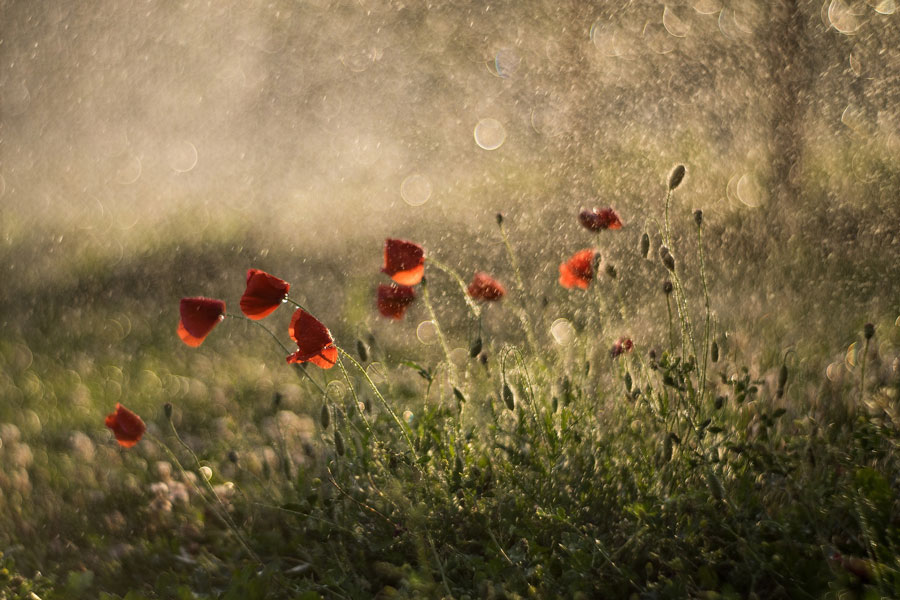
We step our way through the world with hope, on hope, on hope. As one hope falters and falls, the next hope gathers itself, strides out—then stumbles to its knees. Never mind: the next hope is already born and bracing itself to step over its fallen comrades. Or, so it may certainly have seemed, when we slogged our way through the trials and tribulations of addiction. Our life seemed one long cascade of hopes that were dashed to bits on the reefs of disappointment.

Disappointment

To safeguard our recovery, we can use a simple technique to reframe the disappointments that follow our broken hopes and expectations. We can simply let go of the expectation. That hope has served its purpose. It gave us energy for a while. But now, the shattered hope is mere debris. We need to move on. Let go. And paddle out into the new flow. Let’s float on the swell, rather than fight a rip-tide. We can ride the highpoints and the low points with equal equanimity.

The power of hope is to push us forward, to excite us, to keep us motivated. But by its very nature, hope has a short shelf life. We restock hope as fast as the cans fly off the shelves… The trick for those of us in recovery who wish to retain our sanity, is to modulate the excitement that is hope’s companion. Too much excitement, too fast—with too rapid a fizzle after the fact—is a risky way to conduct ourselves in recovery. Nice to get fired up, but let’s turn down the burners to a simmer, so we can hang in for the long haul…

Today, let’s practice a calming movement that can help us regain our peace of mind after a temporary tumble into disappointment:

Stand with your heels together, feet angled out at 45 degrees, knees slightly bent. Hold the hands at groin level just off the body, palms facing up, in a cup-like position. Inhale as you slowly raise your palms to upper chest level, exhale as you lower your hands back to your starting position.

Further enhance the movement of breath and energy by placing your attention initially at the base of your spine, then running it up to the top of your head on the inhale. On the exhale, run your attention down the front of your body to just below your navel. Do 10 or more repetitions.

I feel calm, energized and relaxed all at the same time—a wonderful combination!
Filed Under: Spark Your Day Tagged With: breathing, breathing exercise, disappointment, energy, reframing, relaxation

The Gratitude Attitude

January 29, 2018 By John Du Cane

“Piglet noticed that even though he had a Very Small Heart, it could hold a rather large amount of Gratitude.”—A.A. Milne

When we hit a patch of road construction, do we protest the inconvenience—or do we find it pleasing to contemplate the smoother rides ahead? Can we be thankful—grateful—for whatever we are confronted by? After all, this is the hand we’ve been dealt to deal with… We always have the choice to transform that moment, with an attitude of gratitude—or to resist that moment and suffer accordingly…

In our using days, it would have seemed preposterous to be grateful for every single moment of our unfolding lives. We were in way too much pain, much too guarded, to open ourselves to the attitude of gratitude. However, as we entered the gates of recovery, we came to believe that to be grateful in attitude was to stimulate an immediate response from the world around us. Be grateful to the world and it will shower its grace back at you. We discovered that our leap of faith into gratitude was quickly rewarded in kind.

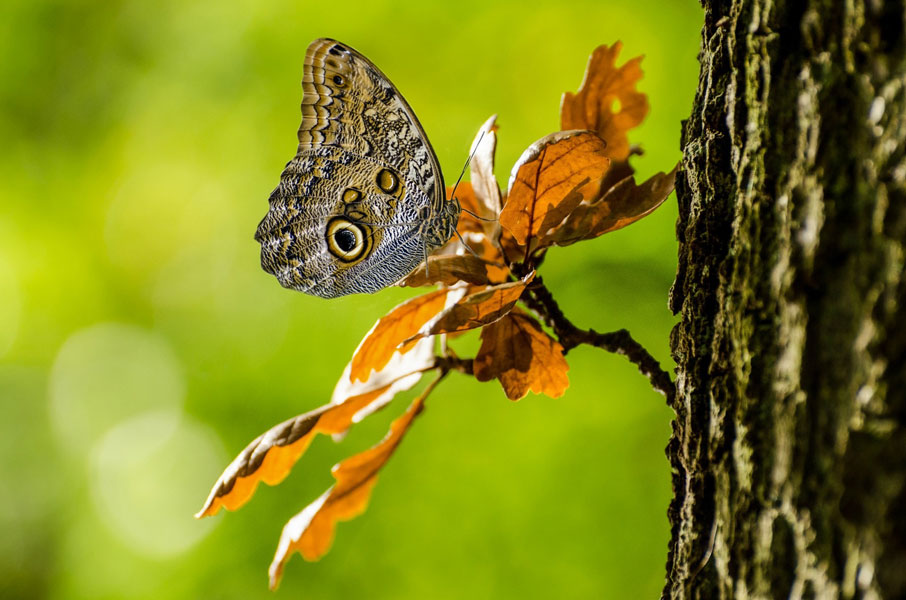
For today then, let’s welcome whatever we have in front of us with this greeting: “Pleased to meet you. How can I help?” In recovery, we learn to offer help and accept help as the currency of a healthy spirit. The butterfly sips from the plant. Pollinated, the plant spreads its seed… That’s the natural way—and the natural way is a profoundly perfect way for those of us in recovery, is it not?

Gratitude Butterfly

When we broadcast gratitude, life transforms before our eyes. What’s magical is the speed with which this transformation happens—because it happens with the speed of light.

The gratitude choice is triggered from the mind—but its current comes from the heart. In our using days it was hard for us to love—to come from the heart—when all we were really thinking about was ourselves and our next chemical hit.

The arrival of love in our hearts was one of the nice surprises for many of us when we began our recovery. “Love exists! Who knew?” we exclaimed in wonder to ourselves—as our wounded souls bathed in the love we could not formerly feel or give… To nurture this heart energy is to nurture our recovery—big time.

With today’s internal movement method let’s be grateful for our bodies, just as we find them in this moment… And let’s in the process send our bodies some loving attention.

Lie down on a comfortable surface. Put your right palm over your heart area. Take a long, slow inhale through the nose. Sense the breath penetrating with the help of your attention deep into your beating heart. Hold your breath for about five seconds, feeling your heart. Exhale slowly. Smile gently while you send the energy out from your heart to every cell in your body. That would be the energy of love, the energy of gratitude… Hold your breath after the exhale for about another five seconds, feeling your entire body. Repeat for a total of ten cycles.

It’s empowering to acknowledge that I can transform each moment of my life by simply switching on the attitude of gratitude.

Filed Under: Spark Your Day Tagged With: breathing, breathing exercise, gratitude, love

Radical Dishonesty

January 25, 2018 By John Du Cane

“The trouble with lying and deceiving is that their efficiency depends entirely upon a clear notion of the truth that the liar and deceiver wishes to hide.”—Hannah Arendt

It’s sometimes remarked with a wry smile that one definition of an alcoholic is someone who lies even when they don’t have to. Let’s call this compulsive need to dissemble, “radical dishonesty.” Not a compulsion any of us would really like to live with, right? But, many of us in recovery will shake our heads at the extent to which we were once the poster child for radical dishonesty. Our self-induced suffering knew few boundaries to begin with—our compulsive deceit just pushed those boundaries to the further edges of the horizon…

The dance of deceit is an ever more complex dance to perform—as we prance away from the simpler patterns that would otherwise represent our truth. As users—out of shame or fear of legal consequences—we burrowed ever deeper into our hidden foxholes. When we finally got rousted, ousted and busted, the cobwebs of our lies seemed to lace us in their gray tangle. Over time—and with much help—we started to brush off the cobwebs and disentangle ourselves from the mess of our deceit. But habits die awfully hard—and the habit to lie was once our second nature…

Opening up to others and getting real with our stories is one key to a healthy recovery. Embellishment is good entertainment. But when we distort and hide even the simplest stories behind a veil of falsehoods, entertainment devolves into a hollow script of furtive secrets.

Dishonesty

Pill-popping, snorting, spiking, sucking, toking, glugging and other chemical endeavors numbed us to the full pain and foolishness of our deceitful behavior. As we cleaned up our chemical dependencies, we began to deep-clean the behaviors our chemicals had enabled. Tough stuff, but essential if we were to remain on the path of recovery.

Today might be a good day to reflect on one of the dubious stories we may still be telling ourselves and others. Let’s take a minute to hold that tall tale up to the light. Perhaps it still serves a worthwhile purpose. However, perhaps it does not—and we can now safely discard it without losing our sense of self. Each of us would be the best judge of our own stories in this regard…

Was it perhaps anxiety-provoking to confront a deceitful story we had been clinging to? That would be pretty natural! Let’s handle that right away with a powerful breathing method recommended by the Lung Institute, amongst others. It’s called Pursed Lips Breathing, or PLB. PLB has numerous health benefits, including a reduction of stress and anxiety:

Stand or sit, with shoulders down and relaxed. Inhale slowly through the nose for two seconds with your mouth closed. No need to labor for a deep breath—just take a normal, gentle inhale. Exhale through the mouth for four seconds (the extended time period is very important). When exhaling, purse your lips as if giving a kiss. While exhaling, keep the breath slow and steady. No force. Repeat ten to twenty times.

It feels great to relax out of holding on to a needless deceit.

Filed Under: Spark Your Day Tagged With: breathing, breathing exercise, deceit, dishonesty, PLB, pursed lips breathing

Watering and Weeding

January 24, 2018 By John Du Cane


“The height of cultivation always runs to simplicity.”—Bruce Lee

If we want to cultivate a beautiful garden, we commit to regular, conscientious care. Dumping a truckload of water once a year is not going to cut it. Nor is once-a-year weeding. Rather, we water and weed with consistent moderation. Feeding and clearing, feeding and clearing. The pleasing riot of color we wished for can then stand forth against its green, clean backdrop…

Watering Weeding

The deeper we cultivate our recovery, the simpler the recovery becomes. Simple, yes, but simple from diligent, persistent, wise effort. We become what we continue to cultivate. This way, the tortured complexities that choked off our serenity can be cleared away—to allow our simpler, stronger nature to blossom out.

So, yes, the practice of recovery is an attentive, daily practice. We cultivate our spiritual muscularity and emotional resilience by facing up every day to cleansing and feeding our inner beings. And, along with our inner beings, we care on a daily basis for our bodies, our outer beings, as it were… It is good to match inner and outer care. Lack of diligence in the one can easily transfer to lack of diligence in the other. Such lack of care can lead to stagnation and a slow deterioration of our composite well-being. In recovery, we can ill afford to take risks with our well-being, whether inner or outer…

Movement means life. And in recovery, daily physical movement is a must, when it comes to the “weeding and the watering”… Because, when we move, we stimulate the healing flow of fresh blood throughout our system. We stimulate synovial fluids in our joints—helping to reduce pain and discomfort. Movement with good breathing stimulates the lymph system, helping it to flush out the toxic crud which inevitably accumulates within us. It doesn’t have to be much, but let’s move some every day…

Here’s an easy, natural-feeling movement that will calm you and energize you simultaneously:

Stand in a relatively wide stance, knees bent so the thighs are at about a forty-five-degree angle. Tuck your butt under, so it’s not sticking out. Feel your thighs somewhat challenged in the stance. Keep the knees aligned with your feet. Start with your palms facing up in front of the stomach. On a long, slow inhale, raise your hands in front of your torso, above your head, slowly turning the palms, so they are facing away from you at the top-most position. On a long, slow exhale, circle your palms out down and around until they arrive in front of the stomach.

Now, reverse the sequence:

On a long, slow inhale, circle the palms out to the side and up until they are above your head. On a long, slow exhale, bring the palms down in front of your torso until they are at stomach level. Rotate the palms as they descend, so they are facing down when you complete the movement.

Start over with another sequence and repeat for a total of eight or more sequences.

It feels so good to be clean and energized today.

Filed Under: Spark Your Day Tagged With: breathing, breathing exercise, cultivation, energy, lymphatic system, movement, simplicity

The Power of Positive Regret

January 23, 2018 By John Du Cane

“Make the most of your regrets; never smother your sorrow, but tend and cherish it till it comes to have a separate and integral interest. To regret deeply is to live afresh.”—Henry David Thoreau

There’s a much-loved line in an old French song by Edith Piaf: “Je ne regrettte rien”, or, in English “I regret nothing”. While this is a laudable sentiment, it begs a bigger picture—particularly for those of us in recovery. For regret can be the very stuff of healing. The sociopath may feel no regret for his actions—because he is simply incapable of feeling. To regret is to acknowledge an error—to learn from it and to commit to a wiser path in the future. No regrets—perhaps, no lesson learned, no wisdom gained?

Regret

Like so many emotions in recovery, regret is a feeling to be handled with kid gloves. Moderation is everything. We balance between the need to acknowledge our mistakes and the compulsion to wallow in self-recrimination. Too much handwringing can lead us to the edge of relapse. Too little courage to face our faults and too little determination to make course corrections, can crimp the progress of our recovery. We step with care on the jungle path, alert, paying attention to the signals and responding appropriately…

Welcome then, to the notion of “positive regret.” Let’s take a minute to identify some serious mistake we made in the past. A mistake whose memory still snaps at our heels, dogging us with unease. Let’s take a minute to see the mistake for what it was: a mistake. Note the lesson—and what we’re going to do different next time round. Watch that mistake as it floats away downstream and now forever out of sight… Excellent! What a relief!

The ancient art of letting go came to our rescue once again. The ancient art is good that way: always ready to give a helping hand if we only just ask!

Here’s a movement to smile with, as you practice your positive regret:

Stand or sit with good posture, shoulders relaxed. Tilt your head back so you are looking up at the ceiling. Stay comfortable in the movement. Then, bring your chin as close to your chest as you can manage—without moving any other part of your body. Inhale up, exhale down. Do ten or more repetitions. By the way, this movement is superbly healing when it done on a regular basis. Consider doing it every day…

I feel complete as I acknowledge, learn from and let go of an old regret.


Filed Under: Spark Your Day Tagged With: breathing, breathing exercise, healing, lessons, regret

  • « Go to Previous Page
  • Page 1
  • Page 2
  • Page 3
  • Page 4
  • Page 5
  • Go to Next Page »

Primary Sidebar

About The Author

John Du Cane CubistStylePortrait316x400
Illustration by Judit Tondora

John Du Cane is a publisher and writer. He is the founder of Dragon Door Publications and is best known for having launched the modern kettlebell movement in 2001 and for the publication of the international bestseller Convict Conditioning. Most recently he collaborated with Debbie Harry on the writing of her New York Times bestselling memoir Face it.

Contact: support@johnducane.com

John Du Cane CubistStylePortrait316x400
Illustration by Judit Tondora

Contact: support@johnducane.com

Privacy Policy

Secondary Sidebar

Books

The Illustrated Wild Boy by John Du Cane

“An absorbing memoir perfectly complemented by exquisite art.” — Kirkus Reviews

“It’s rare to find a multifaceted short story collection of vignettes whose tales are equally well rooted in artistic, personal, and social observation. The result is a creative and involving work of art, language, and social inspection that will delight readers looking for literary works strong in spiritual and social revelations.” — Midwest Review of Books

Face It Debbie Harry

I spent around eleven months helping Debbie Harry with the writing of her memoir. Check it out and let me know what you think!

Books  |  Reviews  |  Blog  |  About  |  Contact


Copyright © 2026 John Du Cane