• Skip to primary navigation
  • Skip to main content
  • Skip to primary sidebar
  • Skip to secondary sidebar

John Du Cane

  • Books
  • Reviews
  • Blog
  • About
  • Contact

energy

What Will Be Our Legacy?

February 25, 2018 By John Du Cane

“Carve your name on hearts, not tombstones. A legacy is etched into the minds of others and the stories they share about you.”—Shannon L. Alder

When others talk about us—now and in the future—what would they say? And what would we hope they’d say?  What would they say about our character, our deeds, our impact on their lives? What about us would have left a mark—and in what form?

These are questions we mostly used to shy from, in the days of our addiction. We knew all too well that our character was cracked and flawed, our deeds so suspect, our impact mostly hurtful and destructive. Our lives had become unmanageable—and that unmanageability was like a poison seeping into the groundwater, tainting all it touched.

Let’s face it, we could barely bear to face the harm we wrought on the world. We hid from our own selves and formed a kind of delusional casing around ourselves. We made stuff up and threw it into the air to distract and hopefully dazzle away the curious. We were ashamed of ourselves but scared to change. Whatever public contributions we had made seemed to pall against the ignominy of our inner lives.

As we straightened ourselves out and started to rebuild our shattered lives, we dared to dream that we too could still have a legacy to leave our world. That our presence on this planet had not, after all, been a vain exercise in wonton self-centeredness. That we could still be remarked on and remembered for having brought beauty, grace and love into the hearts of others. Perhaps we could—yes—even be admired and respected for our reborn hearts and resurrected character. Something of us wonderful could live on beyond and after us…
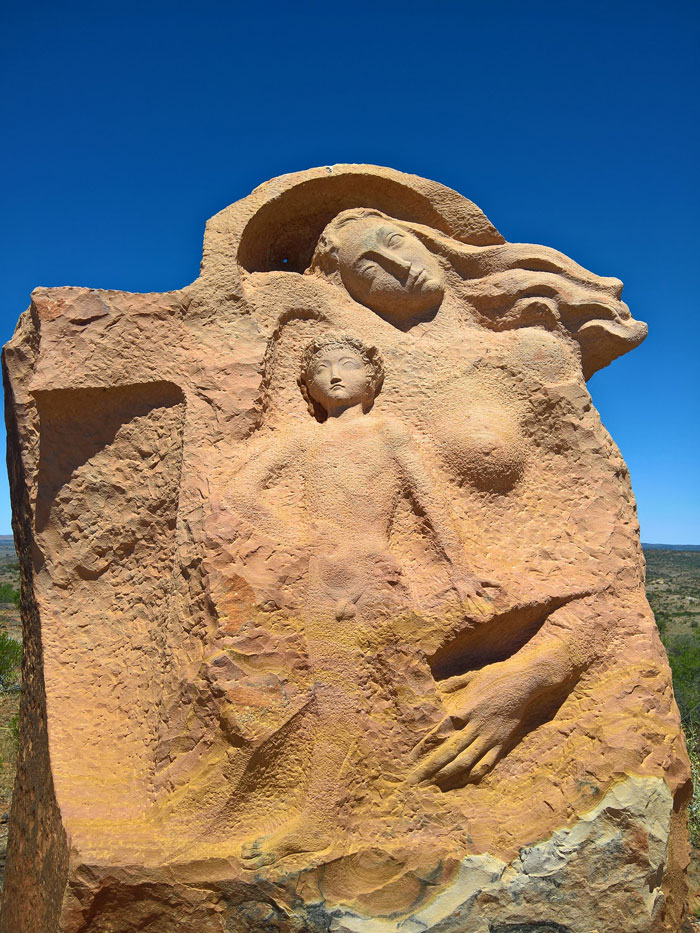
Legacy

So, today, let’s contemplate the legacy we are leaving to the world. What more can we do to burnish its gold? What unfinished act could we now complete, to the betterment of all? Sometimes it can be tiredness—a kind of world-weariness—that holds us back from such acts of completion. We were so close but never quite crossed the finishing line. What—perhaps small—thing can we complete today?

Need an energy boost to get moving on the task before you? Nothing ever beats the good old full bodyweight squat to get your heart pumping and putting a blaze in your eyes:

Stand with your feet shoulder-width apart. Cross your arms over your chest and squat down as low as you can, preferably below parallel and eventually with your thighs touching your calves. Keep your knees from bowing in by aligning them with your feet. Keep your back as straight as possible. Come back up and lock out your legs and hips completely. Squeeze the muscles in your legs as tightly as possible for a second, relax and repeat the squat. Inhale and hold the breath as you descend. Exhale as you ascend. Do twenty repetitions—or as close to twenty repetitions as you can manage while maintaining good form.

I am grateful to contribute the legacy of my self to the world.
Filed Under: Spark Your Day Tagged With: contemplation, energy, legacy, squats

Cellular Cravings

February 19, 2018 By John Du Cane

“You don’t want to love—your eternal and abnormal craving is to be loved. You aren’t positive, you’re negative. You absorb, absorb, as if you must fill yourself up with love, because you’ve got a shortage somewhere”—D. H. Lawrence

Do we have a shortage somewhere? A shortage that is creating an insatiable craving for more and more and more and more? Are we yearning for some ineffably deep connection that will finally make us whole? Are we pacing the streets of hope, umbilical cord in hand, looking for a place to plug it in? Such a condition is common to most mankind, but is particularly prevalent in those of us with a propensity to addiction.

In our using days, our cells were afire in a frenzy of unabated craving. Thousands upon thousands of starving creatures teamed within us, it seemed, with an insatiable appetite for the sweet succor of an endorphin hit. And more distressing yet, the more we fed the ravenous crowds of creatures, the more they multiplied within us—until a veritable army of desperados was set to storm the gates.

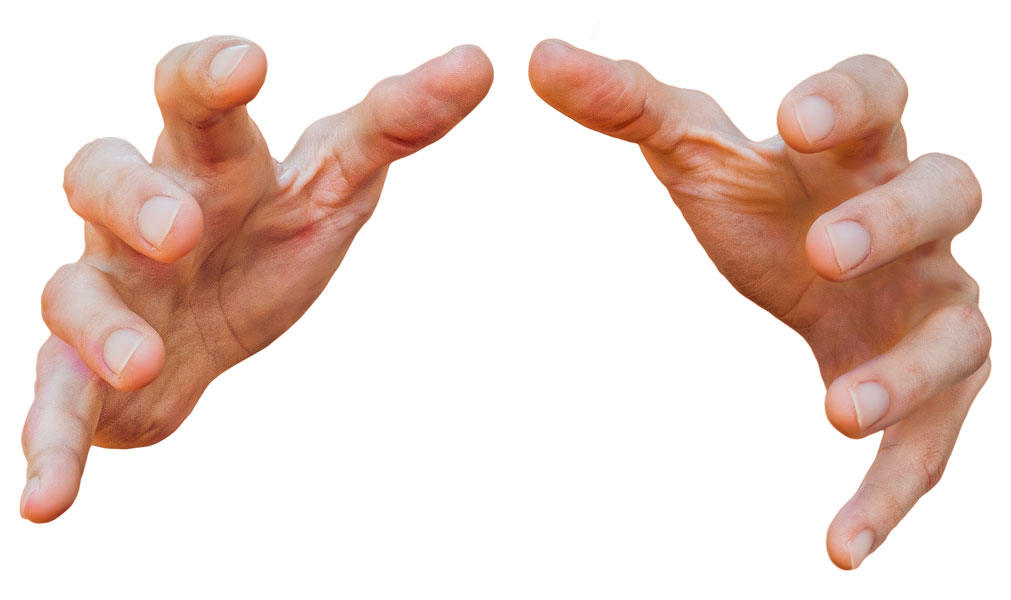
Cravings

As we moved into recovery, the debris of the creature wars lay all about us. We, the stunned survivors, could only shake our heads at the severed limbs, the smashed heads, the broken bones, the screams and cries of agony. Fortunately we were now connected to a fellowship that could help us gently and slowly pick up the pieces, clean up the battlefield and start our healing journey.

And also fortunately, help is at hand to start handling our cellular cravings so we can be less easily tipped into a risky neediness. Consistent meditation and movement can initiate a cascade of healing hormones within our bodies. As we regain the capacity to care and love, that care and love given and received initiates further benign cascades. Now the creatures are being fed with foods that don’t inflame them and stress them out. The creatures feel comforted—and at least to some extent—satisfied. We can relax into our beings and live in the moment more easily…

Today, let’s consider recommitting to activities that can have a healing impact on our creatures’ appetite. Let’s look at least one activity, in particular, that we could incorporate into our daily health regimen. And by “health regimen” we are naturally referring to the whole spectrum: body, mind and spirit…

Here’s one possible activity to consider:

Stand with your heels together, feet angled out at 45 degrees, knees slightly bent. Hold the hands at groin level just off the body, palms facing up, in a cup-like position. Inhale as you slowly raise your palms to upper chest level, exhale as you lower your hands back to your starting position.

Further enhance the movement of breath and energy by placing your attention initially at the base of your spine, then running it up to the top of your head on the inhale. On the exhale, run your attention down the front of your body to just below your navel. Do 10 or more repetitions.

I enjoy the feeling of tranquility that comes from calming down my creatures.

Filed Under: Spark Your Day Tagged With: breathing, breathing exercise, care, cravings, energy, love

Disappointment

January 31, 2018 By John Du Cane

“How disappointment tracks the steps of hope”—Letitia Elizabeth Landon

We step our way through the world with hope, on hope, on hope. As one hope falters and falls, the next hope gathers itself, strides out—then stumbles to its knees. Never mind: the next hope is already born and bracing itself to step over its fallen comrades. Or, so it may certainly have seemed, when we slogged our way through the trials and tribulations of addiction. Our life seemed one long cascade of hopes that were dashed to bits on the reefs of disappointment.

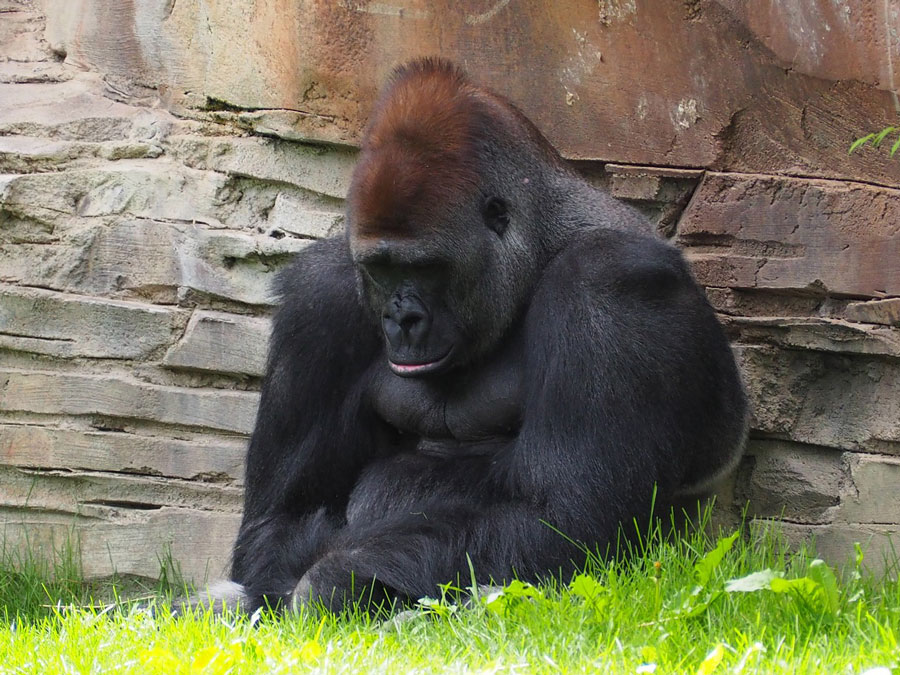
Disappointment

To safeguard our recovery, we can use a simple technique to reframe the disappointments that follow our broken hopes and expectations. We can simply let go of the expectation. That hope has served its purpose. It gave us energy for a while. But now, the shattered hope is mere debris. We need to move on. Let go. And paddle out into the new flow. Let’s float on the swell, rather than fight a rip-tide. We can ride the highpoints and the low points with equal equanimity.

The power of hope is to push us forward, to excite us, to keep us motivated. But by its very nature, hope has a short shelf life. We restock hope as fast as the cans fly off the shelves… The trick for those of us in recovery who wish to retain our sanity, is to modulate the excitement that is hope’s companion. Too much excitement, too fast—with too rapid a fizzle after the fact—is a risky way to conduct ourselves in recovery. Nice to get fired up, but let’s turn down the burners to a simmer, so we can hang in for the long haul…

Today, let’s practice a calming movement that can help us regain our peace of mind after a temporary tumble into disappointment:

Stand with your heels together, feet angled out at 45 degrees, knees slightly bent. Hold the hands at groin level just off the body, palms facing up, in a cup-like position. Inhale as you slowly raise your palms to upper chest level, exhale as you lower your hands back to your starting position.

Further enhance the movement of breath and energy by placing your attention initially at the base of your spine, then running it up to the top of your head on the inhale. On the exhale, run your attention down the front of your body to just below your navel. Do 10 or more repetitions.

I feel calm, energized and relaxed all at the same time—a wonderful combination!

Filed Under: Spark Your Day Tagged With: breathing, breathing exercise, disappointment, energy, reframing, relaxation

Watering and Weeding

January 24, 2018 By John Du Cane


“The height of cultivation always runs to simplicity.”—Bruce Lee

If we want to cultivate a beautiful garden, we commit to regular, conscientious care. Dumping a truckload of water once a year is not going to cut it. Nor is once-a-year weeding. Rather, we water and weed with consistent moderation. Feeding and clearing, feeding and clearing. The pleasing riot of color we wished for can then stand forth against its green, clean backdrop…

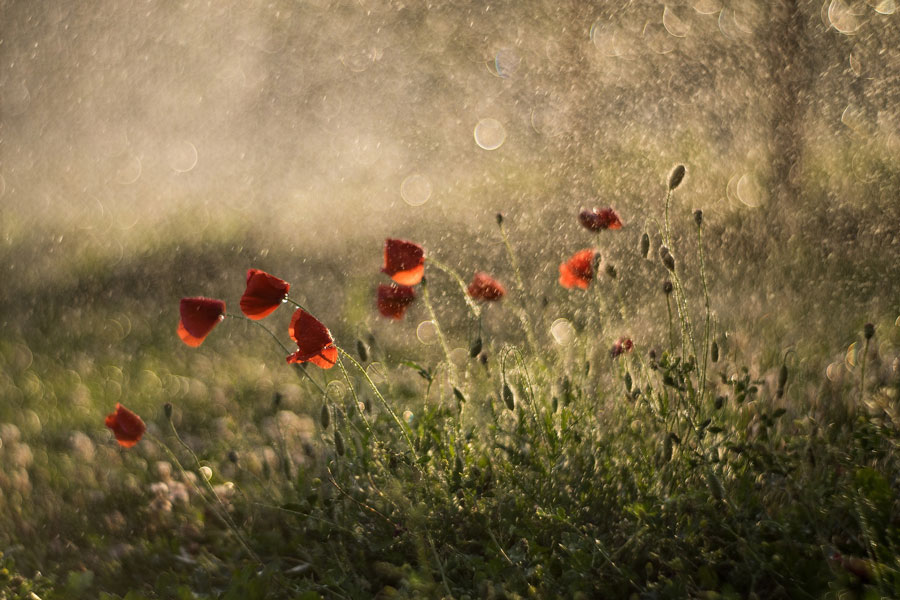
Watering Weeding

The deeper we cultivate our recovery, the simpler the recovery becomes. Simple, yes, but simple from diligent, persistent, wise effort. We become what we continue to cultivate. This way, the tortured complexities that choked off our serenity can be cleared away—to allow our simpler, stronger nature to blossom out.

So, yes, the practice of recovery is an attentive, daily practice. We cultivate our spiritual muscularity and emotional resilience by facing up every day to cleansing and feeding our inner beings. And, along with our inner beings, we care on a daily basis for our bodies, our outer beings, as it were… It is good to match inner and outer care. Lack of diligence in the one can easily transfer to lack of diligence in the other. Such lack of care can lead to stagnation and a slow deterioration of our composite well-being. In recovery, we can ill afford to take risks with our well-being, whether inner or outer…

Movement means life. And in recovery, daily physical movement is a must, when it comes to the “weeding and the watering”… Because, when we move, we stimulate the healing flow of fresh blood throughout our system. We stimulate synovial fluids in our joints—helping to reduce pain and discomfort. Movement with good breathing stimulates the lymph system, helping it to flush out the toxic crud which inevitably accumulates within us. It doesn’t have to be much, but let’s move some every day…

Here’s an easy, natural-feeling movement that will calm you and energize you simultaneously:

Stand in a relatively wide stance, knees bent so the thighs are at about a forty-five-degree angle. Tuck your butt under, so it’s not sticking out. Feel your thighs somewhat challenged in the stance. Keep the knees aligned with your feet. Start with your palms facing up in front of the stomach. On a long, slow inhale, raise your hands in front of your torso, above your head, slowly turning the palms, so they are facing away from you at the top-most position. On a long, slow exhale, circle your palms out down and around until they arrive in front of the stomach.

Now, reverse the sequence:

On a long, slow inhale, circle the palms out to the side and up until they are above your head. On a long, slow exhale, bring the palms down in front of your torso until they are at stomach level. Rotate the palms as they descend, so they are facing down when you complete the movement.

Start over with another sequence and repeat for a total of eight or more sequences.

It feels so good to be clean and energized today.

Filed Under: Spark Your Day Tagged With: breathing, breathing exercise, cultivation, energy, lymphatic system, movement, simplicity

The Pain Body

January 19, 2018 By John Du Cane

“The pain-body wants to survive, just like every other entity in existence, and it can only survive if it gets you to unconsciously identify with it. It can then rise up, take you over, ‘become you,’ and live through you.”—Eckhart Tolle

Residual emotional pain can lurk like a virus in our system, waiting to trigger and burst forth when we become suddenly vulnerable. Like a virus, there is a cunning intelligence to this “pain body.” And, like a virus, it is ever alert for the opportunity to gorge itself at our expense. When the pain body does have a breakout, the damage from the feeding frenzy can be expensive.

Some of us have relatively mild and quiescent pain bodies. They live deep within us and are rarely triggered. Others of us seem to be more like “pain bodies waiting to explode.” The rage, the fear, the hatred, the resentment seethe and simmer just below our surface—ready to leap from our throats, talons bared, at the slightest provocation.

The Pain Body

In recovery, it is essential to build some skills against a sudden pain body attack. Or a pain body attack from another person. A major theme running through Spark Your Day is the need for us to be ever-vigilant in protecting ourselves against incipient vulnerabilities. A vulnerability not attended to in time, can lead all the way to a relapse, after all.

By its nature, the pain body can only grow when we feed it. If we are attacked by another person’s pain body eruption, by far the best strategy is to not give it juice. Just don’t respond. The pain body attack will dissolve through lack of reciprocity.

If the pain body attack is erupting from within us, then we have at best a few seconds to negate its impact—before we are overwhelmed and become its victim. Self-awareness is the ultimate self-defense against the pain body. Remaining fully aware—noting but not reacting to the proffered engagement—will burn away the pain body’s power. However, some of us may lack the meditative skills to pull that off successfully…

Here’s a movement/awareness/breathing exercise to help fortify our chances of vaporizing a pain body attack:

Stand relaxed with the feet shoulder-width apart. Place your attention in your stomach (where the attention goes, the energy goes). Take a long, slow, deep inhale that expands your stomach gently, like a balloon. As you perform this inhale, raise your right hand up and across your body until it is opposite your left shoulder.

During the movement, spiral the hand and arm as if screwing in a light bulb. When you reach the top position, your palm will be facing up toward the ceiling. Run your attention from your stomach, up your back, then through the arm and finally into the palm as you complete the movement.

Spiral your palm and arm down back to your right side, as you exhale. Reverse the flow of your attention, so you guide the energy back from the palm to the stomach. Repeat this movement ten times. Or more, if you want. Then switch to your left hand and repeat on the other side.

Don’t be surprised if your fingers and palms start to warm up and even tingle as you do this. That’s the breath and energy stimulating your blood flow. Which is a beautiful thing! Over time, performing this movement will leave you feeling a nice combination of relaxed and energized—the perfect defense against that pain body trying to disrupt your equanimity…

It feels so empowering to be able to relax out of my self-induced tension!

Filed Under: Spark Your Day Tagged With: breathing, energy, pain body, tension

  • Page 1
  • Page 2
  • Go to Next Page »

Primary Sidebar

About The Author

John Du Cane CubistStylePortrait316x400
Illustration by Judit Tondora

John Du Cane is a publisher and writer. He is the founder of Dragon Door Publications and is best known for having launched the modern kettlebell movement in 2001 and for the publication of the international bestseller Convict Conditioning. Most recently he collaborated with Debbie Harry on the writing of her New York Times bestselling memoir Face it.

Contact: support@johnducane.com

John Du Cane CubistStylePortrait316x400
Illustration by Judit Tondora

Contact: support@johnducane.com

Privacy Policy

Secondary Sidebar

Books

The Illustrated Wild Boy by John Du Cane

“An absorbing memoir perfectly complemented by exquisite art.” — Kirkus Reviews

“It’s rare to find a multifaceted short story collection of vignettes whose tales are equally well rooted in artistic, personal, and social observation. The result is a creative and involving work of art, language, and social inspection that will delight readers looking for literary works strong in spiritual and social revelations.” — Midwest Review of Books

Face It Debbie Harry

I spent around eleven months helping Debbie Harry with the writing of her memoir. Check it out and let me know what you think!

Books  |  Reviews  |  Blog  |  About  |  Contact


Copyright © 2026 John Du Cane