• Skip to primary navigation
  • Skip to main content
  • Skip to primary sidebar
  • Skip to secondary sidebar

John Du Cane

  • Books
  • Reviews
  • Blog
  • About
  • Contact

movement

Opportunity Cost

February 20, 2018 By John Du Cane

“There is an opportunity cost for everything we do. This is why we must have the awareness to ensure that what we are pursuing is really what we value, because the pursuit leaves countless lost opportunities in its wake. We choose one experience at the sacrifice of all other experiences”—Chris Matakas

What do you want? The potato or the stack of quarters? Everything we choose comes at a cost. Choose one thing and we have lost the opportunity for another. We give up one value to obtain another. Such is the transactional life—we are the spoon, balanced on the calculator, weighing our options.

Opportunity cost

Now, in those bad old using days, our spoon was teetering all over the place. We really had only the one opportunity we wished to pursue—and that was the opportunity to get smashed, blitzed, stoned, obliterated, numbed, whacked out or jacked up. Pursuing the addiction-fulfillment opportunity to the max meant a massive opportunity cost in unattended relationships, broken commitments, erratic work habits, financial debt and a host of other life-deficiencies.

We paid an opportunity cost too with our health as we burned the candle at both ends and drained our energy reserves. In other words, we valued the altered state above all else—and paid an increasingly steep opportunity cost to support that primary value.

In recovery, we learned to recover our values balance. We became more delicate and more aware about the values we pursued. In fact, these new values and this new sense of balance became essential to our ongoing serenity. We paused more and became more considerate in our choices. We became more attentive to how our decisions affected not only our own opportunity cost but the opportunity cost of others. We no longer saw ourselves as terminally unique. We were connected to a fellowship of support. We listened to our shifts in balance and made the necessary course corrections to stay on track.

The more we work recovery skills of this kind, the more they work for us. For it to work, we work it.

Today, let’s reflect for a moment on how well our value-choices are supporting our balanced recovery. Are we making any choices that may be costing us a finer, safer opportunity of another kind?

To emphasize this contemplation on a physical level, let’s do this simple but often surprisingly challenging movement:

Begin by standing with your feet about six inches apart. Now, raise the right leg, bent at the knee, to about hip height. Bring your arms out to the sides, until they are fully extended at shoulder height. Close your eyes. Breathe gently and hold this position as you count to 60. Open your eyes and bring your right leg down. Repeat with your left leg. If you find it challenging to balance on one leg with your eyes closed and think you might even fall over, rest one hand on the back of a chair. The more you practice the better your balance will become.

I am happy to be choosing values that better support my serenity and which enhance my sense of safety.

Filed Under: Spark Your Day Tagged With: movement, opportunity cost, safety, values, weighing options

Are We Responsible?

February 11, 2018 By John Du Cane

“Most people do not really want freedom, because freedom involves responsibility, and most people are frightened of responsibility.”—Sigmund Freud

The buck stops at our front door. Always has, always will. However, many of us are loath to pick up the buck and acknowledge that yes, we are responsible. Because behind that front door of ours lie one thousand excuses, stacked higgledy-piggledy in every room. The tired excuses, the lame excuses, the righteous excuses, the blaming excuses, the hangdog excuses, the shifty excuses, the aggressive excuses, the tearful excuses, the codependent excuses—they are all children of the same abrogation of responsibility. In fact, go into our backyards and we’ll most likely find the grass strewn with the garbage of our older, rotten reasons for not standing up for what in our souls we knew was right.

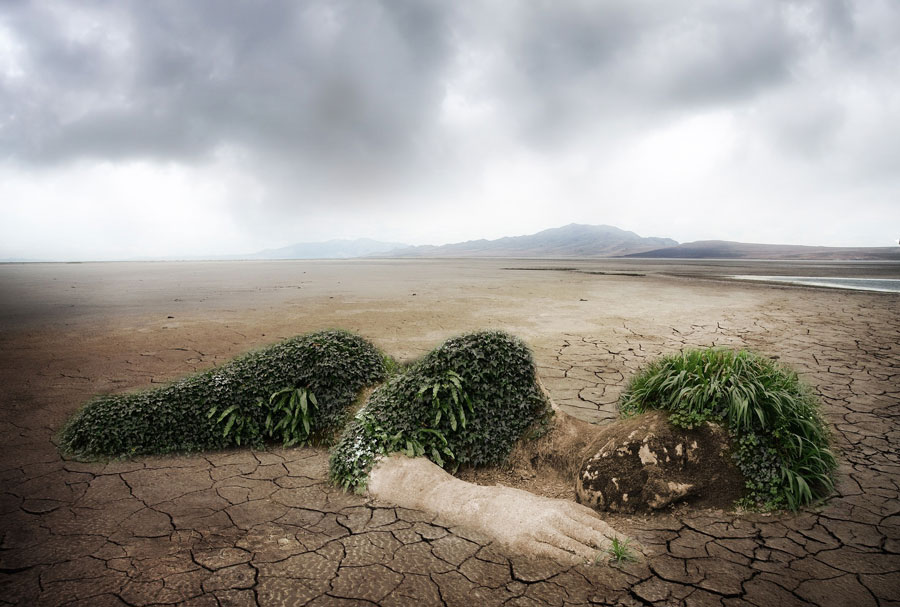
One of the more unfortunate consequences of addiction is the consistent flight from—and denial of—responsibility. When our only true loyalty was to our chemical of choice, we became increasingly reluctant to take a stand that might endanger our own self-centered interests. When we entered life, we entered a lush, verdant jungle teaming with promise and potential. Our addiction laid waste to that green fertility. Our landscape of opportunity became a desert of neglect—until just a few bushes of hope remained…

Responsibility

In recovery, we learned to take responsibility for our actions and behaviors. The fact that our addiction could be termed a disease only released us from shame and its attendant crisis of being. Recognizing that we had a disease for which there was help, we were emboldened to seize the opportunity to act—without using the disease as an excuse. We are what we support and align ourselves with. Support a cause? We are that cause. Support a belief? We are that belief. To take responsibility is to declare a set of values. What will we now stand for—and how strongly are we prepared to stand for it? When is silence and avoidance no longer an option?

So, in recovery, we began to take full responsibility for ourselves and our environment. We actively tilled and watered the parched lands. We planted fresh seeds—and tended the shoots until they grew strong. Slowly and with patience and with dedication we grew back what we had formerly allowed to wither away.

Let’s pause for a moment today and think about a perhaps-less-than-perfect position we might have taken in regard to ourselves, a behavior, another person or a cause. Could there be room for some adjustment? If so, then let’s contemplate that adjustment as we perform today’s movement…

Pick up a heavy object, any heavy object, bring it to your chest and squat down with it. Heavy is a relative term. Let the object be heavy for you, but a weight you can manage without injuring yourself in the process. Squat as low as you can go while maintaining good form and posture. Hold the bottom of the squat position for ten to twenty seconds, depending on your strength and determination. See the “hold” of the object and of the position as a “taking of responsibility.” Now, rise back up slowly. Repeat three to five times.

It feels so good to take full and complete responsibility for who I am and what I stand for, today.

Filed Under: Spark Your Day Tagged With: consequences, freedom, movement, responsibility

The Death of Fun

February 10, 2018 By John Du Cane

“Contemplate for a moment the possibility of living without the constant need to be entertained, to be satisfied, to be pampered, to be stimulated, or to be in a state of perpetual bliss.”—Wee Peng Ho

Can we have fun without being drugged up? To some folk, that might seem like a silly question. But to those of us self-declared addicts and alcoholics, the question was all too loaded. Was it really possible to have fun without being blitzed out of our noodles? It seemed incomprehensible to us that fun could be had without some sort of chemical stimulation to fire it up. No drugs, no sizzle, no fun, we thought. The sizzle would fizzle when the stash ran out.

Once upon a time, when the dose on the label said one teaspoon, we would add at least one zero and pour ourselves a glassful. If the indication was one cap per day, we would spill six caps into our palm and gulp them down. And if not enough fun happened within half an hour we would reach back and amp the dose a second time. Hey—as addict-wisdom had it—if one’s good, then ten has got to be a whole lot better, right? This would be too funny, if it wasn’t so true… But we were the little child—who hugged the rearing predator, oblivious to the risk…

Fun

Eventually, of course, the hungry lion roared and pounced. Some of us died outright. Some of us were terribly mauled, dragged to safety by our friends. Others of us escaped with some slashes and gashes—just enough to wake and shake us up. We, the wounded, entered recovery. Slowly we healed. But where, oh where, had all the fun gone? The cravings would be slow to subside. We begged to be relieved somehow, someway… It was a dicey time, was it not?

The discovery, it turned out, was that fun could still indeed be had—if we would only stop chasing so hard to grab it. There were safe places with safe people we could hang with. Slowly, we let fun seep into our bones without pushing for more and more and more. The nice surprise was that the more we relaxed out of neediness, the more fun could join us in our lives.

Here’s a very simple, pleasurable way to feel delicious quickly, without having to be aggressive about it (works like a charm):

Stand in a relaxed posture, with your arms by your sides. Close your eyes. Circle your arms up in a wide embracing movement, until your palms are facing your forehead. Keep the shoulders down and relaxed, elbows down. Inhale as you bring your palms toward your forehead, until they are a couple of inches away. Use your attention to bring the energy gently into your forehead. Rotate your palms so they are facing away from your forehead at about a forty-five degree angle. Exhale as you move your palms away from your forehead. Turn your palms towards your forehead and repeat.

When your palms come close to your forehead on the third iteration, turn the palms to face the floor and move them to mid-chest level. Inhale without any physical movement. On the exhale, rotate the palms to face out at a forty-five degree angle and move the palms away from the chest. Rotate your palms to face your chest and as you inhale bring the palms and energy toward the center of the chest. Repeat another two times.

When your palms come close to your mid-chest on the third iteration, turn the palms to face the floor and move them to stomach level. Inhale without any physical movement. On the exhale, rotate the palms to face out at a forty-five degree angle and move the palms away from the stomach. Rotate your palms to face your stomach and as you inhale bring the palms and energy toward the center of the stomach. Repeat another two times.

You have completed one cycle now. Complete as many cycles as you care to.

I relax out of neediness today and enjoy the gentle tranquility of feeling complete as I am right now.

Filed Under: Spark Your Day Tagged With: breathing, breathing exercise, fun, movement, relaxation

Grace Under Fire

February 7, 2018 By John Du Cane

“When you know in your bones that your body is a sacred gift, you move in the world with an effortless grace. Gratitude and humility rise up spontaneously.”—Debbie Ford

When chemicals aren’t racing and raging through our blood and brains, it’s somewhat easier to move with grace and elegance through our lives. In our using and abusing days, we cared not much a whit about such niceties as grace and elegance. We wanted the firestorm, the maelstrom, the surge, the burst, the jack, the hit, the bang—anything that would push us into an extreme of feeling. Or we wanted the great numbing—the opiate that would anesthetize us to any possibility of felt pain. We met stress with either excess or freeze-out. We fought, we ran or we froze.

In early recovery, the turbulence in our veins began to subside. Our shot and frayed nerves began to soften and re-sheathe themselves. The oscillations in mood, the energy swings started to level out some.  We found we had to be patient with the process. There is only so much toxic residue and upset that can be safely removed and defused in a certain period of time. And each of us is remarkably different in constitution and capacity when it comes to that cleaning practice. We found great solace in knowing that we were not alone in this journey of recovery. We had a new fellowship who could sustain us in our darker moments, our waves of discomfort and discouragement. We realized that the chemicals had bitten hard—and those wounds needed plenty of time and care to heal.

In recovery, we are acutely aware that the little user-beastie still lurks patiently within us—just waiting for a slip, so it can pull us back into our former insanities. Getting impatient with the recovery process—trying to force the healing too fast and hard—can boomerang back on us and cause a dangerous distress. Relaxing and taking it easy is the ticket, we learned, to a safe, steady and resilient recovery.

When we relax and let our bodies feel themselves, we have the opportunity to move with greater self-assurance. And from that relaxed acceptance, we can move with a more gentle elegance. We will feel more graceful to ourselves and we will look more graceful to others.

Grace

When our natural-born grace feels under fire, it’s good to have a repertoire of movements we can use to douse the flames and calm things down. Today, let’s practice one such move:

Stand with feet shoulder-width apart, arms by your sides. Knees slightly bent, butt tucked under, shoulders down and relaxed. Put your attention in your stomach. Simply swing your arms behind you with a moderate push to get things going—rather like priming a pump. Then let the swings rebound forward and up with a sense of effortless grace. Push back when the arms reach the top of their unforced arc. Do at least twenty repetitions, but anywhere up to one hundred would be great.

This movement is very calming indeed—and also naturally detoxifying—as it will help activate your debris-cleansing lymph system.

I move gently—and as I move, the grace descends upon me and fills my being.

Filed Under: Spark Your Day Tagged With: grace, grace under fire, lymph, lymphatic system, movement

Watering and Weeding

January 24, 2018 By John Du Cane


“The height of cultivation always runs to simplicity.”—Bruce Lee

If we want to cultivate a beautiful garden, we commit to regular, conscientious care. Dumping a truckload of water once a year is not going to cut it. Nor is once-a-year weeding. Rather, we water and weed with consistent moderation. Feeding and clearing, feeding and clearing. The pleasing riot of color we wished for can then stand forth against its green, clean backdrop…

Watering Weeding

The deeper we cultivate our recovery, the simpler the recovery becomes. Simple, yes, but simple from diligent, persistent, wise effort. We become what we continue to cultivate. This way, the tortured complexities that choked off our serenity can be cleared away—to allow our simpler, stronger nature to blossom out.

So, yes, the practice of recovery is an attentive, daily practice. We cultivate our spiritual muscularity and emotional resilience by facing up every day to cleansing and feeding our inner beings. And, along with our inner beings, we care on a daily basis for our bodies, our outer beings, as it were… It is good to match inner and outer care. Lack of diligence in the one can easily transfer to lack of diligence in the other. Such lack of care can lead to stagnation and a slow deterioration of our composite well-being. In recovery, we can ill afford to take risks with our well-being, whether inner or outer…

Movement means life. And in recovery, daily physical movement is a must, when it comes to the “weeding and the watering”… Because, when we move, we stimulate the healing flow of fresh blood throughout our system. We stimulate synovial fluids in our joints—helping to reduce pain and discomfort. Movement with good breathing stimulates the lymph system, helping it to flush out the toxic crud which inevitably accumulates within us. It doesn’t have to be much, but let’s move some every day…

Here’s an easy, natural-feeling movement that will calm you and energize you simultaneously:

Stand in a relatively wide stance, knees bent so the thighs are at about a forty-five-degree angle. Tuck your butt under, so it’s not sticking out. Feel your thighs somewhat challenged in the stance. Keep the knees aligned with your feet. Start with your palms facing up in front of the stomach. On a long, slow inhale, raise your hands in front of your torso, above your head, slowly turning the palms, so they are facing away from you at the top-most position. On a long, slow exhale, circle your palms out down and around until they arrive in front of the stomach.

Now, reverse the sequence:

On a long, slow inhale, circle the palms out to the side and up until they are above your head. On a long, slow exhale, bring the palms down in front of your torso until they are at stomach level. Rotate the palms as they descend, so they are facing down when you complete the movement.

Start over with another sequence and repeat for a total of eight or more sequences.

It feels so good to be clean and energized today.

Filed Under: Spark Your Day Tagged With: breathing, breathing exercise, cultivation, energy, lymphatic system, movement, simplicity

  • Page 1
  • Page 2
  • Go to Next Page »

Primary Sidebar

About The Author

John Du Cane CubistStylePortrait316x400
Illustration by Judit Tondora

John Du Cane is a publisher and writer. He is the founder of Dragon Door Publications and is best known for having launched the modern kettlebell movement in 2001 and for the publication of the international bestseller Convict Conditioning. Most recently he collaborated with Debbie Harry on the writing of her New York Times bestselling memoir Face it.

Contact: support@johnducane.com

John Du Cane CubistStylePortrait316x400
Illustration by Judit Tondora

Contact: support@johnducane.com

Privacy Policy

Secondary Sidebar

Books

The Illustrated Wild Boy by John Du Cane

“An absorbing memoir perfectly complemented by exquisite art.” — Kirkus Reviews

“It’s rare to find a multifaceted short story collection of vignettes whose tales are equally well rooted in artistic, personal, and social observation. The result is a creative and involving work of art, language, and social inspection that will delight readers looking for literary works strong in spiritual and social revelations.” — Midwest Review of Books

Face It Debbie Harry

I spent around eleven months helping Debbie Harry with the writing of her memoir. Check it out and let me know what you think!

Books  |  Reviews  |  Blog  |  About  |  Contact


Copyright © 2026 John Du Cane