• Skip to primary navigation
  • Skip to main content
  • Skip to primary sidebar
  • Skip to secondary sidebar

John Du Cane

  • Books
  • Reviews
  • Blog
  • About
  • Contact

John Du Cane

What Will Be Our Legacy?

February 25, 2018 By John Du Cane

“Carve your name on hearts, not tombstones. A legacy is etched into the minds of others and the stories they share about you.”—Shannon L. Alder

When others talk about us—now and in the future—what would they say? And what would we hope they’d say?  What would they say about our character, our deeds, our impact on their lives? What about us would have left a mark—and in what form?

These are questions we mostly used to shy from, in the days of our addiction. We knew all too well that our character was cracked and flawed, our deeds so suspect, our impact mostly hurtful and destructive. Our lives had become unmanageable—and that unmanageability was like a poison seeping into the groundwater, tainting all it touched.

Let’s face it, we could barely bear to face the harm we wrought on the world. We hid from our own selves and formed a kind of delusional casing around ourselves. We made stuff up and threw it into the air to distract and hopefully dazzle away the curious. We were ashamed of ourselves but scared to change. Whatever public contributions we had made seemed to pall against the ignominy of our inner lives.

As we straightened ourselves out and started to rebuild our shattered lives, we dared to dream that we too could still have a legacy to leave our world. That our presence on this planet had not, after all, been a vain exercise in wonton self-centeredness. That we could still be remarked on and remembered for having brought beauty, grace and love into the hearts of others. Perhaps we could—yes—even be admired and respected for our reborn hearts and resurrected character. Something of us wonderful could live on beyond and after us…
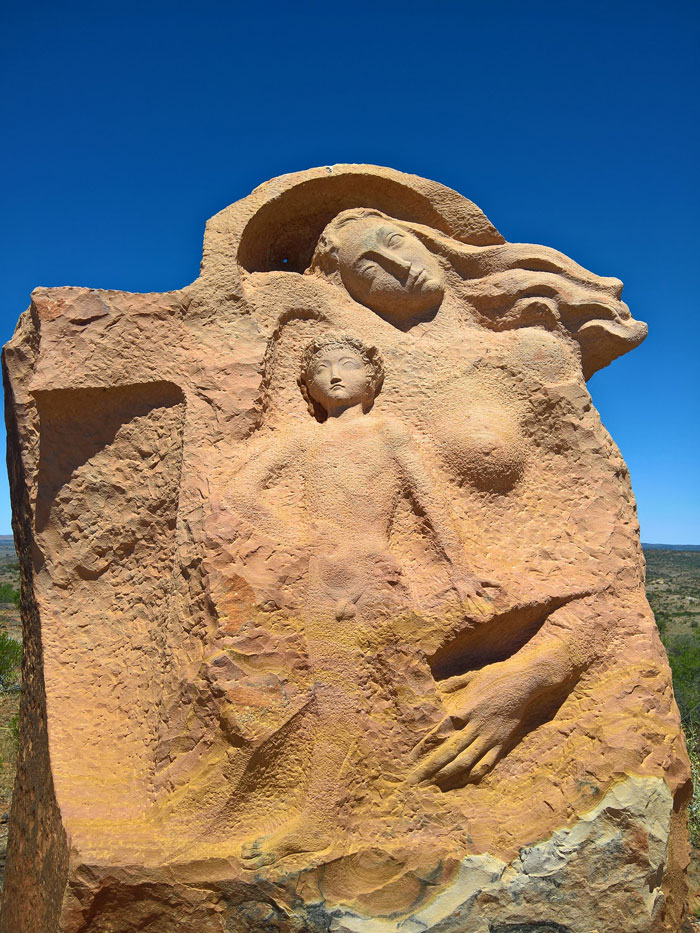
Legacy

So, today, let’s contemplate the legacy we are leaving to the world. What more can we do to burnish its gold? What unfinished act could we now complete, to the betterment of all? Sometimes it can be tiredness—a kind of world-weariness—that holds us back from such acts of completion. We were so close but never quite crossed the finishing line. What—perhaps small—thing can we complete today?

Need an energy boost to get moving on the task before you? Nothing ever beats the good old full bodyweight squat to get your heart pumping and putting a blaze in your eyes:

Stand with your feet shoulder-width apart. Cross your arms over your chest and squat down as low as you can, preferably below parallel and eventually with your thighs touching your calves. Keep your knees from bowing in by aligning them with your feet. Keep your back as straight as possible. Come back up and lock out your legs and hips completely. Squeeze the muscles in your legs as tightly as possible for a second, relax and repeat the squat. Inhale and hold the breath as you descend. Exhale as you ascend. Do twenty repetitions—or as close to twenty repetitions as you can manage while maintaining good form.

I am grateful to contribute the legacy of my self to the world.

Filed Under: Spark Your Day Tagged With: contemplation, energy, legacy, squats

Let’s Join The Crew

February 24, 2018 By John Du Cane

“All is connected… no one thing can change by itself.”—Paul Hawken

When we embarked on recovery, we set sail with trusted companions in a large sturdy boat. We’d paddled our canoe solo against the flow for way too long. We were tired of slipping back—of frantic stroking, with just some churned foam to show for it. In fact, we finally ended up with the paddle ripped from our bleeding hands—the boom of the approaching rapids growing louder by the minute…

Really, we have been the fortunate ones, somehow rescued into recovery by the love of others. And we can congratulate ourselves on having taken advantage of that good fortune by accepting the rescue, making the connections and joining the crew.

Join the Crew

Now we can plunge forward together through the waves of change. We can navigate the inevitable storms, the riptides, the reefs and—yes, also—the doldrums with the courage that comes from companionship. We realized we don’t have to be alone to face our addiction and our tribulations anymore. We can do this thing together—and are stronger for it.

Let’s take a moment today to reflect on all those who cared enough for us in our darkest days—and who helped us toward the salvation of recovery. We know that without our fellow “crew members” we would have continued to chart a destructive—if not terminal—passage through those troubled waters… We can best thank them, can we not, by staying connected, staying part of the team.

Now, let’s give some juice to that overworked fellow who connects our head to our body—the neck. There’s a ton of joints in our neck area that are often starved of healing synovial fluids, because of our tension and rigidity. Bring on those fluids!

The magic juice-stimulator—and it happens in a jiffy—is joint rotation. We agreed to be a crew member, so nodding our heads up and down in agreement seems appropriate: without moving your shoulders, incline your head up and back as far as it will go without discomfort. Now bring your chin to your chest as best you can. Repeat for a total of ten repetitions.

It can be disconcerting to discover how little range of motion we might have in our neck movements—particularly when we turn our head from side to side. Do ten repetitions of that movement also. See what we mean? That’s from too much tension. Frankly, we really can’t move our neck too much. It wouldn’t hurt at all to include neck rotations in your hygiene practice on a daily basis. But for now, we’ll stick with these two movements…

I appreciate those who connected with me and who invited me to join them in the journey of recovery.

Filed Under: Spark Your Day Tagged With: community, crew, joining, neck, tension

Hypocrisy

February 23, 2018 By John Du Cane

“Hypocrisy is the art of affecting qualities for the purpose of pretending to an undeserved virtue. Because individuals and institutions and societies most often live down to the suspicions about them, hypocrisy and its accompanying equivocations underpin the conduct of life. Imagine how frightful truth unvarnished would be.”— Benjamin F. Martin

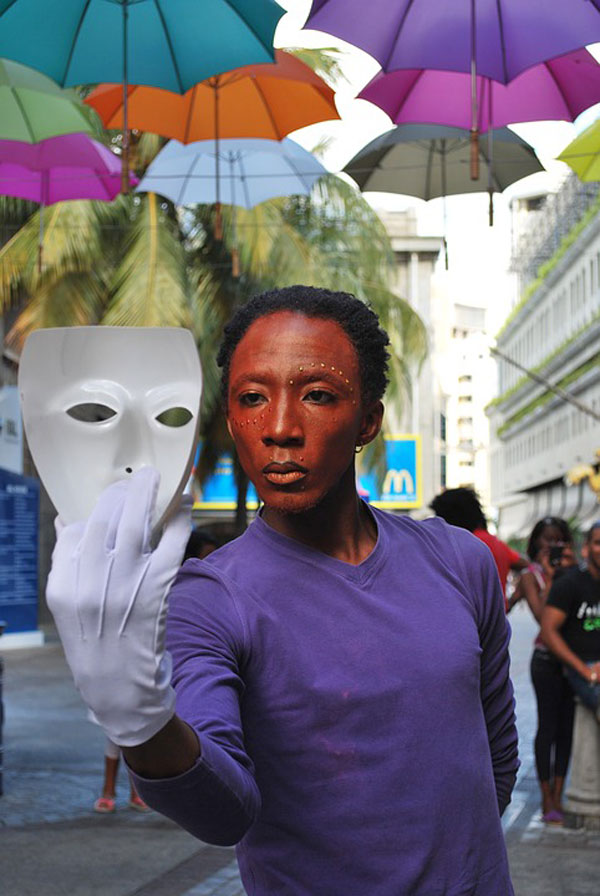
Many of us have been two-faced in our lives—but those of us who succumbed to addiction elevated being two-faced to a high art form. We wheeled and dealed behind our shifting masks in a dizzying display of duplicity that had even the most seasoned con men shaking their heads. We were the great pretenders on the stage, acting out virtues that we did not have rightful claim to. We were the great deceivers, ever-ready to mimic to the gullible what we believed they wanted to hear. We did not mean what we said—and we never said what we meant. We were the hypocrites—holding truth hostage to the demands of our addiction.

Hypocrisy 600

Yes, in our using days, weren’t we just so slick and smug—as we oiled our way from one shady transaction to another? Finally though, we found ourselves in a hall of cracked mirrors, pursued and mocked by demons that were the shades of our various pretenses. Our game faltered and fell apart… Our hypocrisies began to unravel. Our souls split apart. We were exposed. Now came the catcalls and the boos and the shame-mongering, as we were driven from the stage. Our world had cracked. And only a radical decision to seek help could restore us to sanity. We accepted that help and we began our recovery.

And we came to see—as we progressed in our recovery—that hypocrisy had no place in a healthy program. We decided to preach only what we could practice—and we practiced so the practice could allow us to preach more boldly… This way lay wisdom, lay peace, lay serenity, lay the simple pleasure that comes from aligning our words with our actions. And the beauty too, was how much less effort it took to be true to ourselves…

Today, let’s reflect for a few moments on the extent to which we are well aligned in how we present to the world. Might there still, perhaps, be some lurking hypocrisy that could be shown the door? All good then, all good…

We can be out of alignment physically as much as spiritually, of course. Serious physical mis-alignment can benefit from skilled bodywork, but there can be simple, effective ways for us to adjust ourselves. And when we adjust ourselves physically, there is often a carry-over into an emotional-spiritual re-alignment. Here’s what we’ll do today:

Sit, if you are not already sitting. If you just sat down or up—or you were already seated—notice every element of your current posture, before you change anything. Are you slumped over, spine bent? Is your head hanging forward on your protesting neck? Are your shoulders hunched? Is one shoulder higher than another? Are you clenching your jaw? Squinting?

You get the picture… Now, start straightening up— relaxing and rebalancing whatever is obviously tight or out of whack. Once you have completed your re-posturing, put a light smile on your face, close your eyes and simply be with your new alignment. Breathe gently. Rest in yourself for a while. When you feel complete, open your eyes and move on with your day.

I am aligned and appreciate the peace that descends upon me from the feeling of being true to who I really am, right now, this minute.

Filed Under: Spark Your Day Tagged With: alignment, balance, hypocrisy, posture, relaxation

Confidentially Yours

February 22, 2018 By John Du Cane

“Confidentiality is a virtue of the loyal, as loyalty is the virtue of faithfulness.”—Edwin Louis Cole

At one time, we may have lived in a world where we felt it unsafe to share any of our secrets with anyone. Too much was at risk, we thought. We trusted no none—including ourselves. Confidentiality was for the birds… Our loyalty and our faithfulness was only to our drugs of choice, when it came down to it. We would betray others to protect our addiction—and we would assume that our own betrayal was just around the corner.

However, there can be great pain and loneliness when we have no one we trust to confide in. There is great solace in sharing our intimate hopes, fears and dreams with a loyal friend, mentor or loved one. We are finally alone in this world—but the loyal listener can embrace us with their kindness and support, giving us strength to continue when the going gets rough.

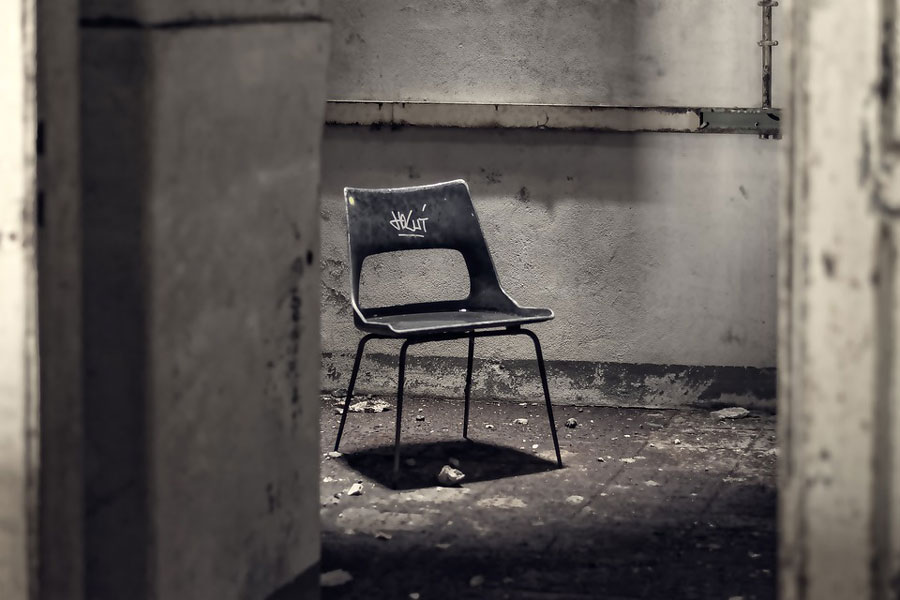
Let us not be like an empty chair in an abandoned, dank and dirty cell. Let’s welcome, instead, the round table of confidants, of companions in a living room of soft and colorful beauty.

Confidentiality

In our recovery, maintaining confidentiality is vital to our sense of safe growth. To know we have a safe haven in which to share our darkest history and most painful vulnerabilities, is to know we have friends who have our backs. No more knives flashing in the closet, no more excited, whispered betrayals, no more wrenching disloyalties. We create, instead, a climate of trust. Yes, as the frail spirits we all are in certain moments, this trust can sometimes falter, breaches happen. Yet the overwhelming message is one of security, of confidence in each other.

Today, let’s reflect on a secret issue that we may be harboring still—and which could benefit from some friendly light being spilled upon it. And who might we most safely share this with? Great…

Speaking of friendly light, let’s perform an “internal” movement to absorb some healing radiance into our bodies:

Stand, sit or lie in a comfortable position. As you take a long slow inhale, sense that you are drawing this radiant light through every pore of your skin, deep into your body. Before you exhale, feel for any area of your body that seems to be holding some special discomfort. Now, as you exhale, draw all that gathered light, focus on the troubled area, and beam the healing light toward it. Use your attention. The light will follow the direction of your attention. Relax a few moments with your breathing paused. Continue with another nine such breath-and-movement cycles…

I relax into my radiant body and feel content.

Filed Under: Spark Your Day Tagged With: breathing, breathing exercise, confidentiality, light, trust

Reward or Treat?

February 21, 2018 By John Du Cane

“A ‘treat’ is different from a ‘reward,’ which must be justified or earned. A treat is a small pleasure or indulgence that we give to ourselves just because we want it. Treats give us greater vitality, which boosts self-control, which helps us maintain our healthy habits.”—Gretchen Rubin

Imagine eavesdropping, at the airport lounge, on this exchange between a distinguished, elderly English couple:

“Darling, do I like chocolate?”

“Yes, darling, you rather do.”

Man reaches an elegant hand into his waistcoat and withdraws a handsome, gold-flecked bar of dark chocolate. Man breaks an angular piece and places it into her outstretched palm. She slides the piece appreciatively into her mouth. Man breaks off a second—rather larger—piece and raises it to his lips.

There is a contemplative silence as the couple savors the deep, rich tones of the chocolate as it melts down their throats. They look at each other. “That was rather good, darling, wasn’t it?” She doesn’t reply, but her eyes smile back at him.chocolate treat or reward

In our recovery, we may get anxious sometimes about treating ourselves with risky indulgences. We may have had difficulty in the past controlling our appetite for the delicious. By the nature of our addiction and compulsions, some pleasure hit was never enough—we always wanted more and more. What may have started out as an innocent treat, became a wild act of excess. In this protective reaction, however, we can become overly rigid in what we now deny ourselves. Chemical dependence makes it mandatory that we consider alcohol, nicotine and other drugs an absolute no-no. However, that doesn’t mean we have to act like cave-bound ascetics, shunning all earthly delights.

In fact, a wonderful way to stay resilient in our recovery is to keep treating ourselves—on a regular basis—to small, safe delights. These delights comfort us and can protect us from a propensity to over-control our natural impulses.

So, let’s reflect on what kind of safe treat we can indulge in today—just because. Just for the pure pleasure of the experience. Good…

Some movements can feel more like a treat than others. Here’s one that almost always feels like a treat:

Stand relaxed with the feet shoulder-width apart. Place your attention in your stomach (where the attention goes, the energy goes). Take a long, slow, deep inhale that expands your stomach gently, like a balloon. As you perform this inhale, raise your right hand up and across your body until it is opposite your left shoulder.

During the movement, spiral the hand and arm as if screwing in a light bulb. When you reach the top position, your palm will be facing up toward the ceiling. Run your attention from your stomach, up your back, then through the arm and finally into the palm as you complete the movement.

Spiral your palm and arm down back to your right side, as you exhale. Reverse the flow of your attention, so you guide the energy back from the palm to the stomach. Repeat this movement ten times. Or more, if you want. Then switch to your left hand and repeat on the other side.

I savor the delights of the sensuous—and my recovery is the stronger for it.

Filed Under: Spark Your Day Tagged With: comfort, reward, savoring, treat

  • « Go to Previous Page
  • Page 1
  • Interim pages omitted …
  • Page 26
  • Page 27
  • Page 28
  • Page 29
  • Page 30
  • Interim pages omitted …
  • Page 39
  • Go to Next Page »

Primary Sidebar

About The Author

John Du Cane CubistStylePortrait316x400
Illustration by Judit Tondora

John Du Cane is a publisher and writer. He is the founder of Dragon Door Publications and is best known for having launched the modern kettlebell movement in 2001 and for the publication of the international bestseller Convict Conditioning. Most recently he collaborated with Debbie Harry on the writing of her New York Times bestselling memoir Face it.

Contact: support@johnducane.com

John Du Cane CubistStylePortrait316x400
Illustration by Judit Tondora

Contact: support@johnducane.com

Privacy Policy

Secondary Sidebar

Books

The Illustrated Wild Boy by John Du Cane

“An absorbing memoir perfectly complemented by exquisite art.” — Kirkus Reviews

“It’s rare to find a multifaceted short story collection of vignettes whose tales are equally well rooted in artistic, personal, and social observation. The result is a creative and involving work of art, language, and social inspection that will delight readers looking for literary works strong in spiritual and social revelations.” — Midwest Review of Books

Face It Debbie Harry

I spent around eleven months helping Debbie Harry with the writing of her memoir. Check it out and let me know what you think!

Books  |  Reviews  |  Blog  |  About  |  Contact


Copyright © 2026 John Du Cane